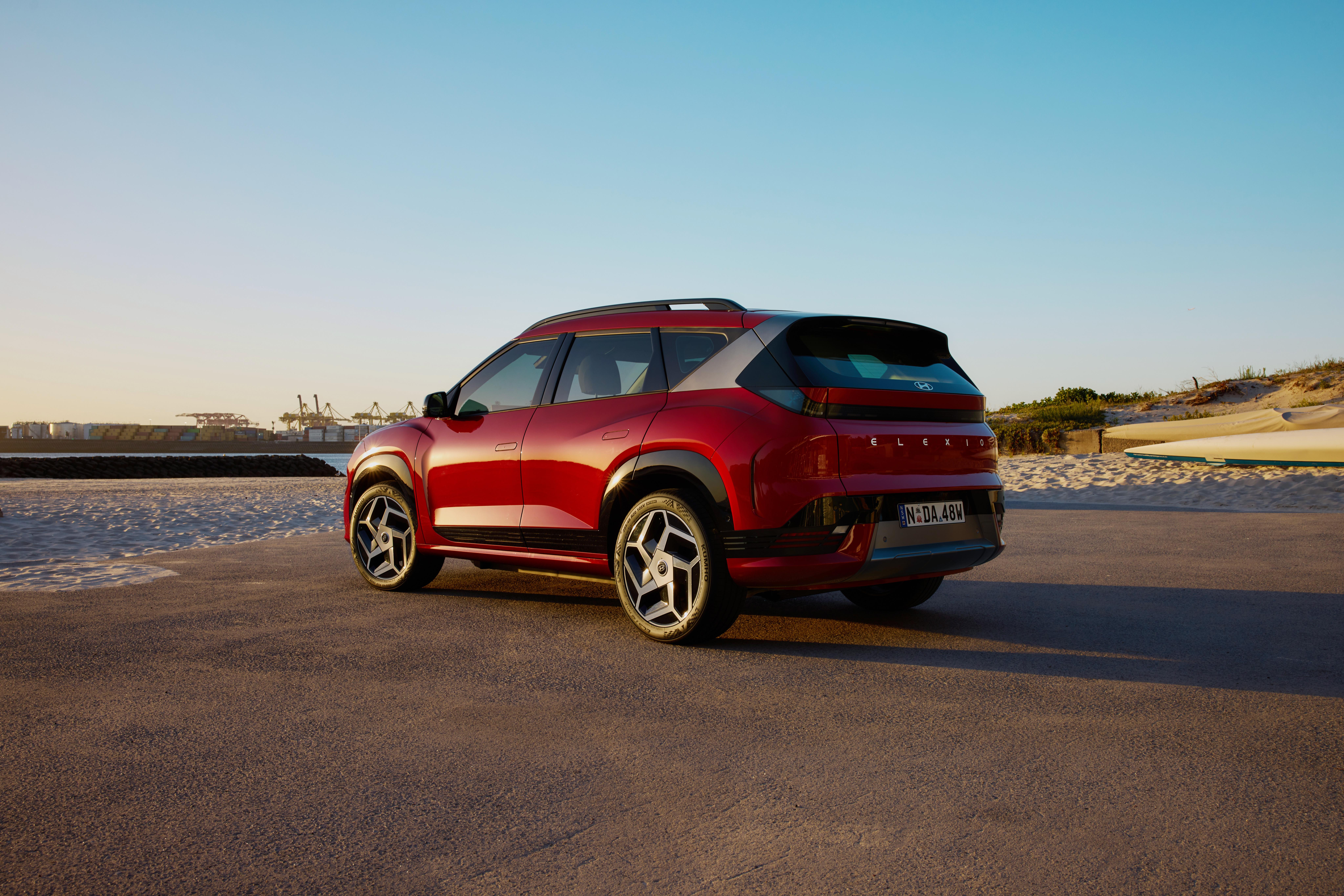
2026 Hyundai Elexio review
Hyundai’s new electric SUV sounds like its name came from Harry Potter.
The 2026 Hyundai Elexio is the Korean brand’s latest entrant into the booming mid-size SUV segment, bolstering its existing Tucson and Ioniq 5 options already on sale. Like the Ioniq 5, the Elexio is all-electric, but unlike the Ioniq 5 it’s sourced from China.
Yes, the Koreans have turned to their neighbours for production of a more attainable electric vehicle (EV) to rival the likes of the popular Tesla Model Y and BYD Sealion 7, much like the related Kia EV5 which is also sourced from China for the Australian market.
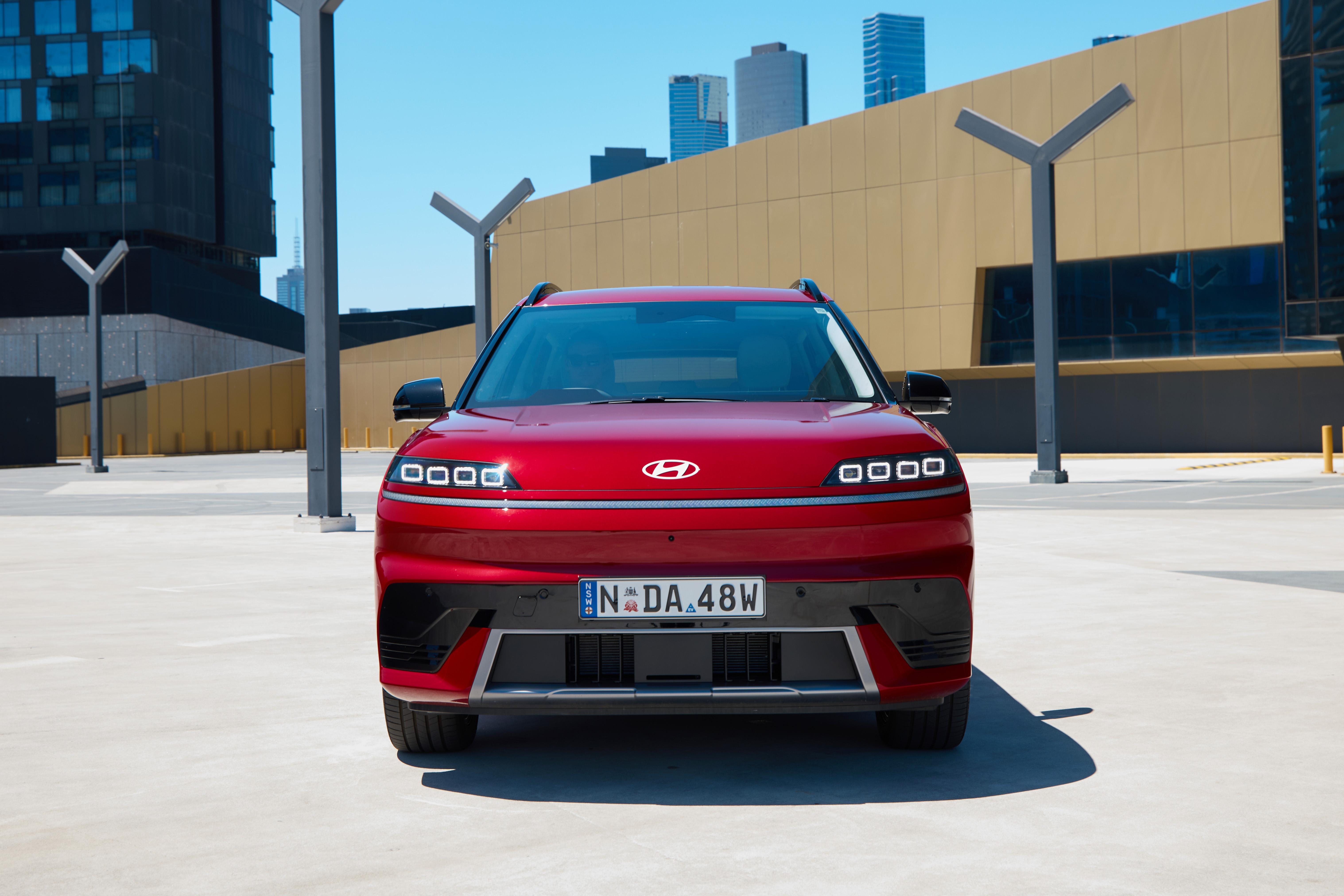
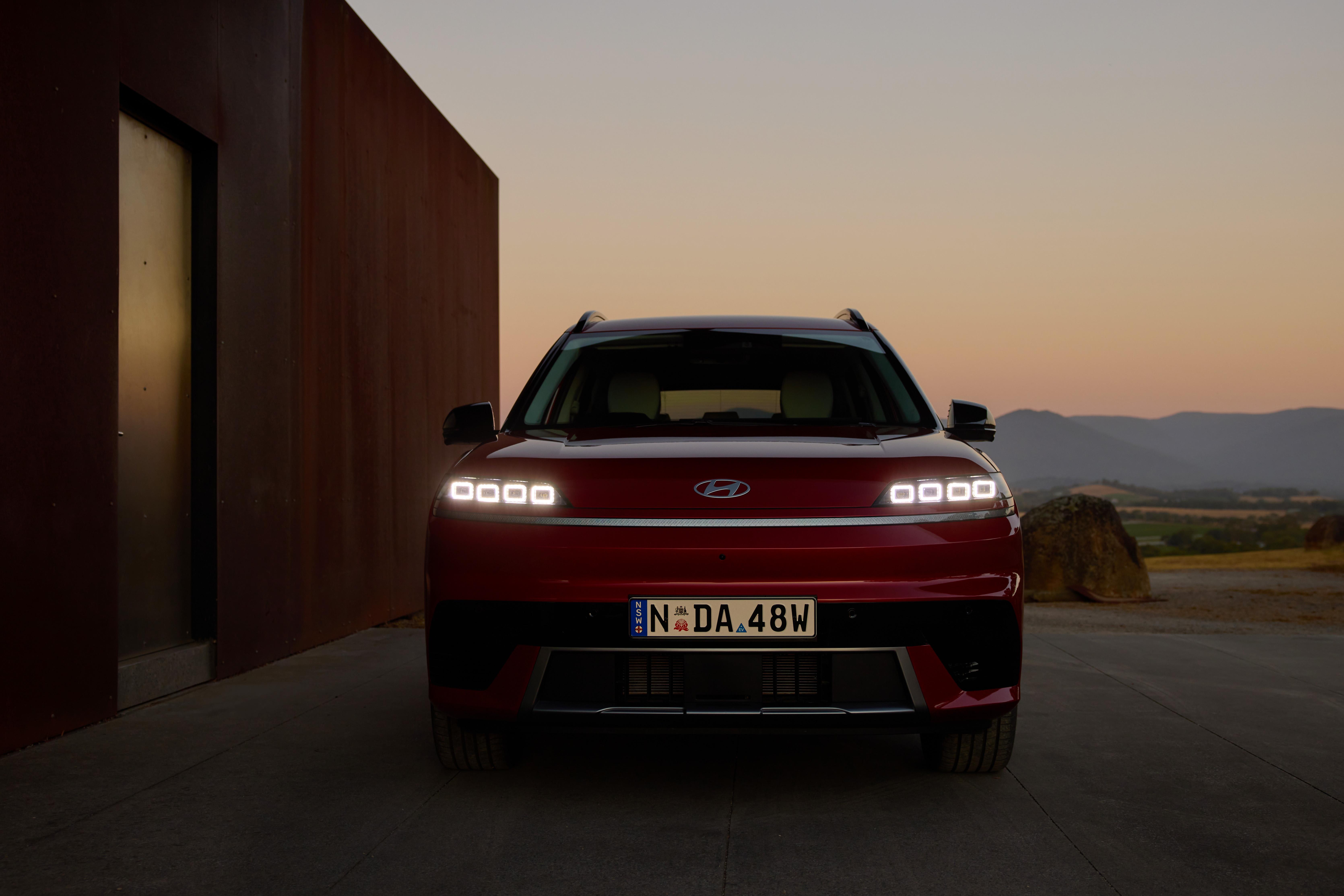
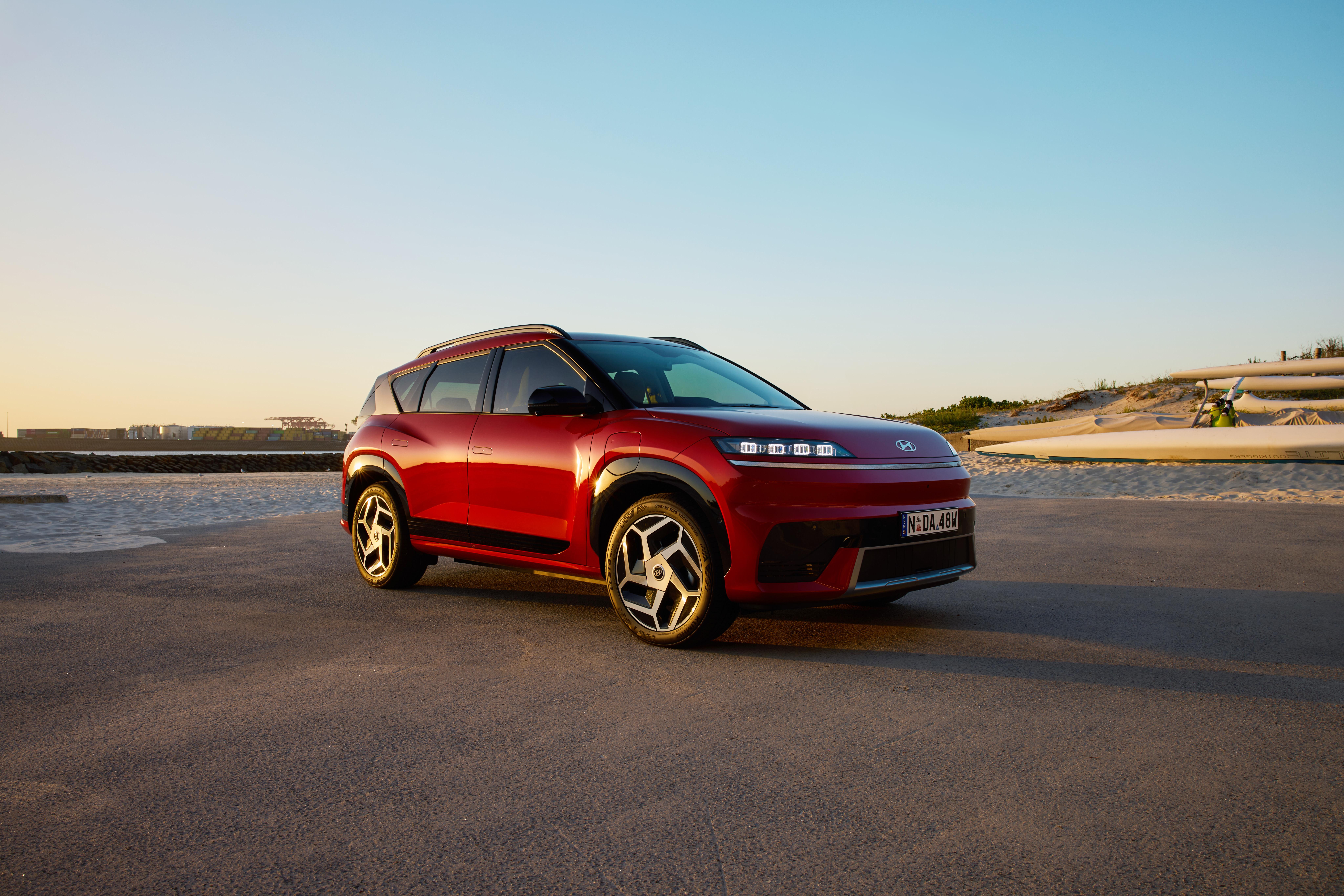
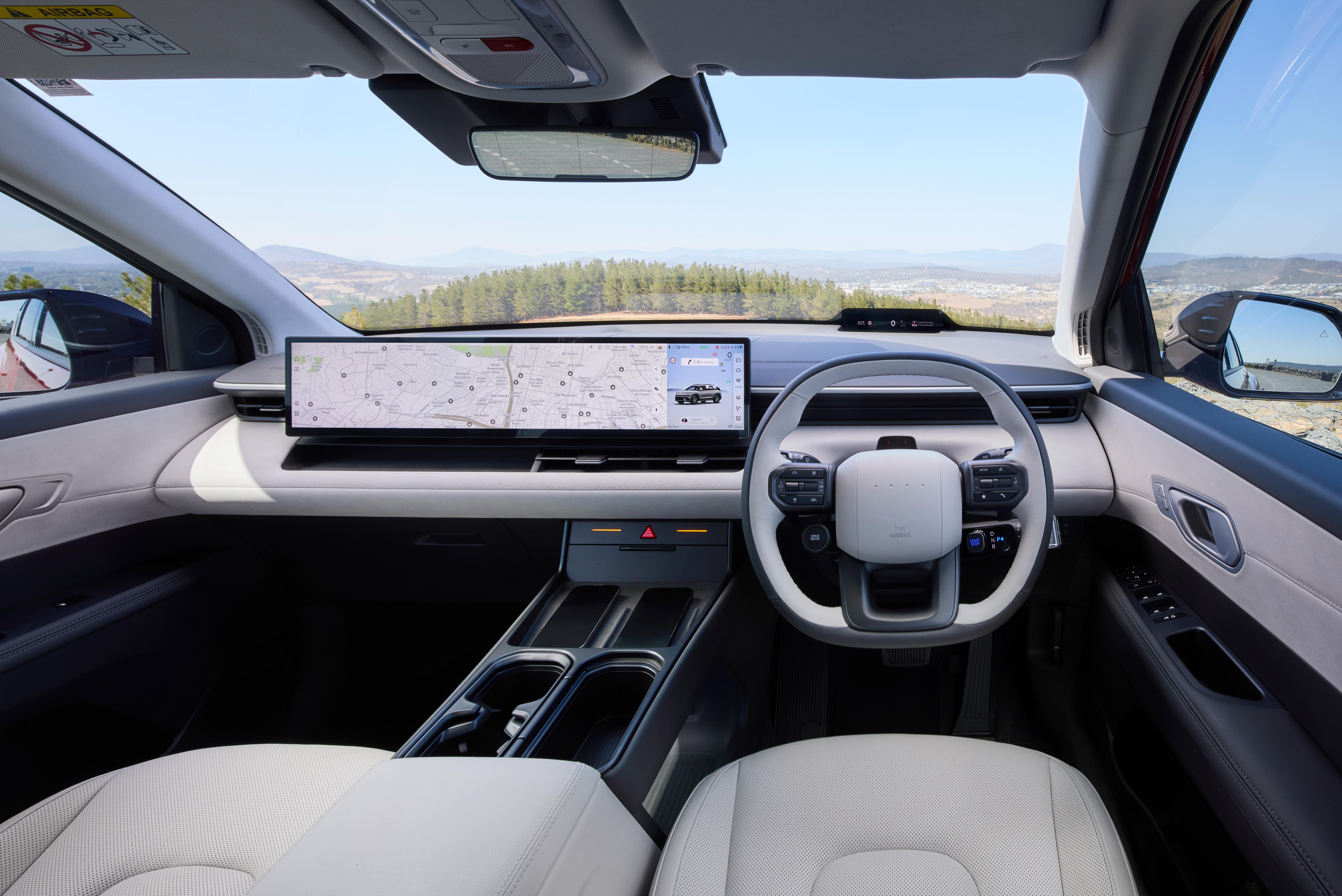
That’s part of the reason why the Elexio doesn’t really look like anything currently available in the current Hyundai range, from the distinctive exterior design to the 27-inch panoramic interior display that spans almost the entire width of the dashboard, running a new Android-based software interface.
It also offers more than 500km of WLTP-certified driving range from its big BYD-supplied LFP battery pack, another product of its Chinese connections.

Hyundai is hoping the Elexio can play in an area of the market the Ioniq 5 has failed to reach, slotting between its more premium stablemate and the smaller Kona Electric to give the Chinese a proper crack at their own game.
It’s also potentially coming for Kia’s lunch, given the EV5 was the top-selling EV that wasn't a Tesla or a BYD in 2025. Will Australians fall under the Elexio’s spell? We attended the Australian media launch in Sydney to find out.
How much does the Hyundai Elexio cost?
The Elexio is priced from under $59,000 before on-road costs for the entry-level variant, while the flagship Elite is priced from $59,990 drive-away until March 31, after which it will move to $61,990 plus on-road costs.
| Model | Price before on-road costs | Drive-away pricing |
|---|---|---|
| 2026 Hyundai Elexio | $58,990 | – |
| 2026 Hyundai Elexio Elite | $61,990 | $59,990 (until March 31) |
The slightly de-specced base variant will join the range for $3000 less during the second quarter of 2026, with Hyundai Australia promising a sharp introductory drive-away offer much like the Elite’s.
While positioned in a more premium price bracket compared to similarly sized electric SUVs from the budget Chinese brands, the introductory offer for the Elexio Elite is the exact same drive-away price as the Kia EV5 Air Long Range – which gets the same drivetrain but less kit – and undercuts the base Tesla Model Y Premium ($58,900 plus ORCs or ~$64,180 drive-away).
The Elexio Elite also bisects the BYD Sealion 7 Premium (from $54,990) and Performance (from $63,990), while the more premium Zeekr 7X (from $57,900) looms as another formidable threat from China. Outside the Middle Kingdom, Japan’s Toyota bZ4X now starts from a very competitive $55,990, while Germany's more powerful Volkswagen ID.4 Pro is currently being advertised for $62,990 drive-away.
Hyundai’s team was also quick to point out the Elexio’s competitive novated lease payments on a weekly basis. Based on a $100,000 salary for a NSW-based driver travelling 75,000km over a 60-month lease, the Elexio Elite comes in from $205 a week, which isn’t far off the Xpeng G6 ($199), Tesla Model Y ($216), Kia EV5 Air Standard Range ($204), and BYD Sealion 7 Premium ($200).
To see how the Hyundai Elexio lines up against the competition, check out our comparison tool
What is the Hyundai Elexio like on the inside?
It basically screens at you!
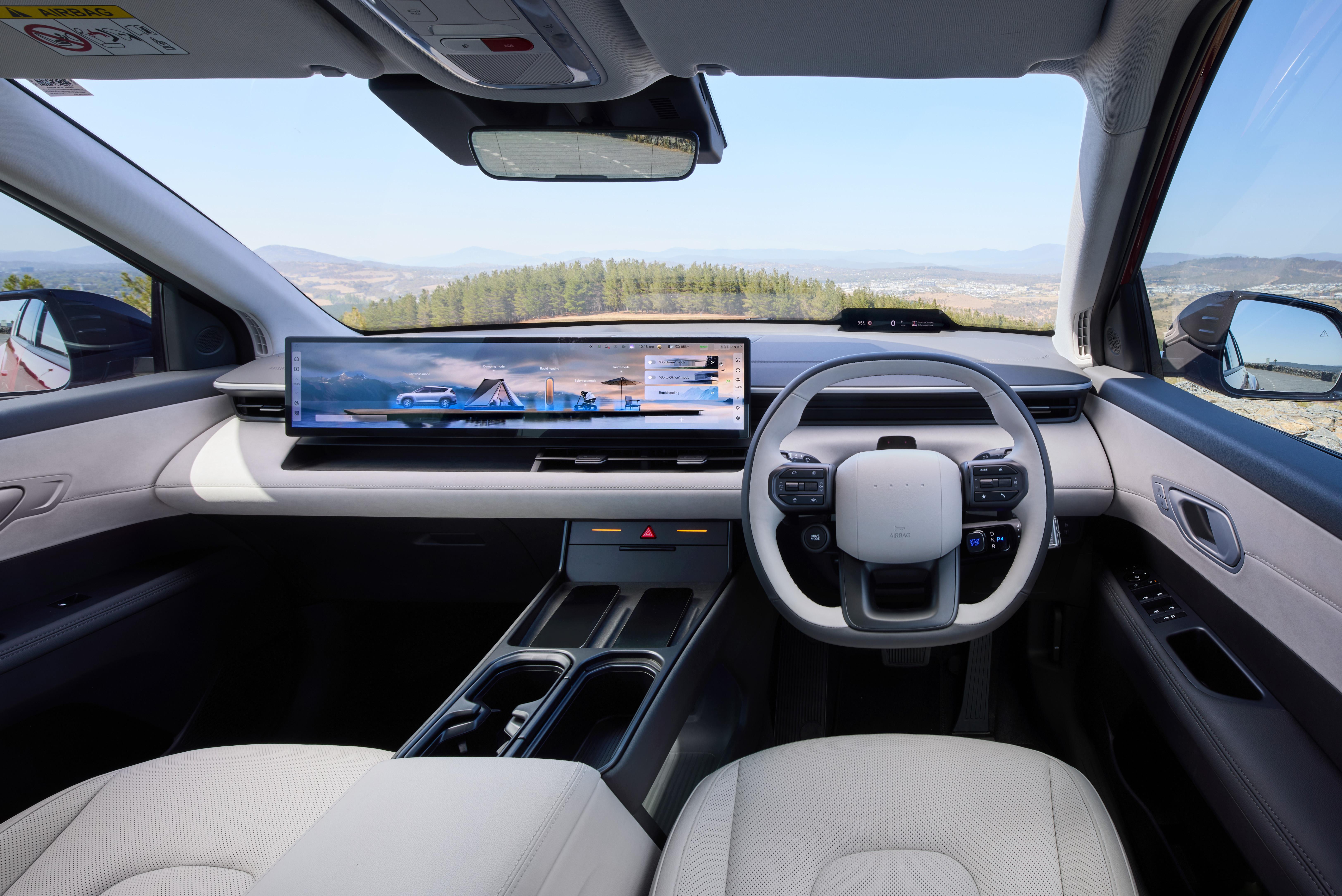
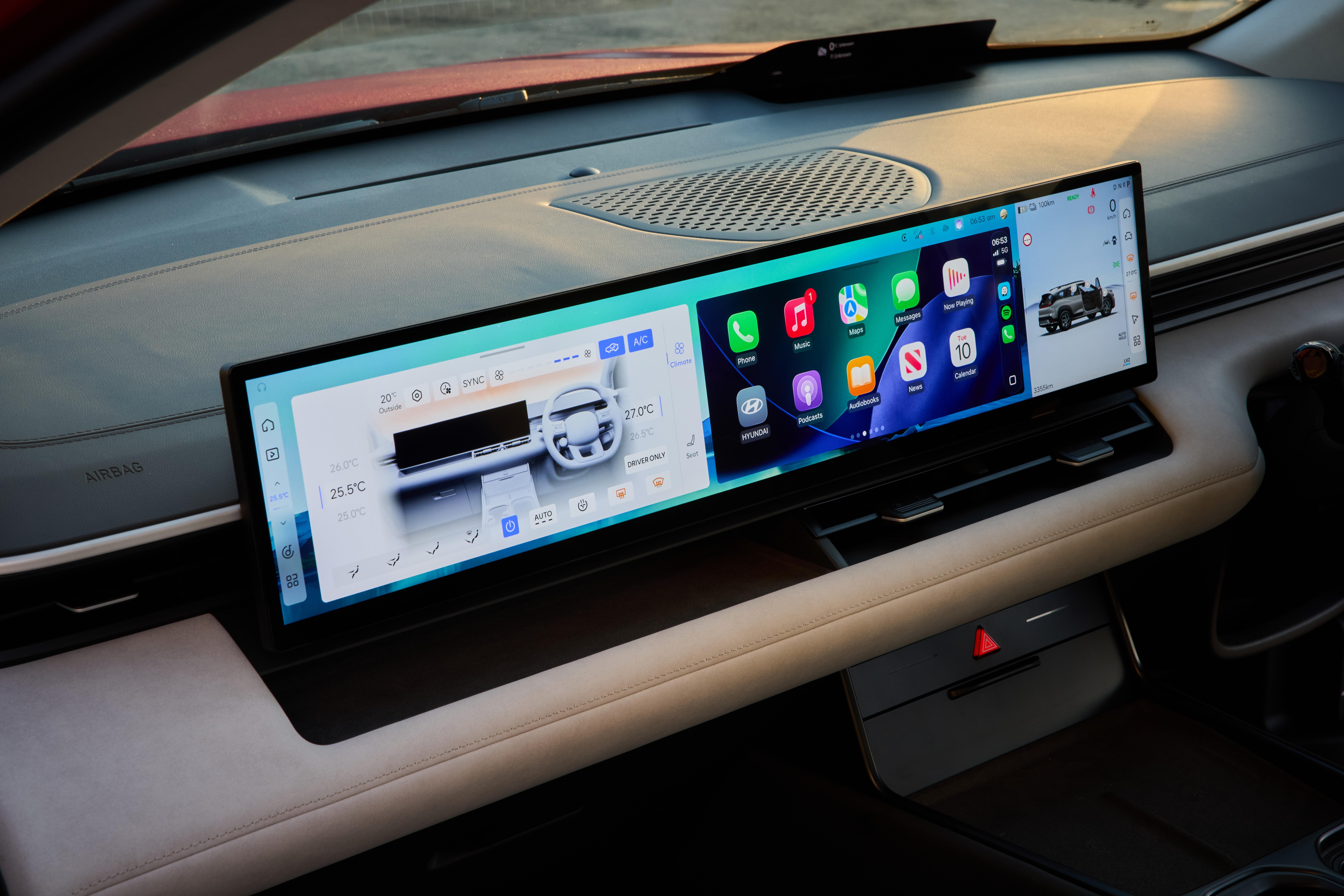
There’s a massive 27-inch widescreen infotainment touchscreen that extends into the passenger’s dashboard area, and while it looks like it could be a variation of the new Genesis setup, it’s more Chinese-brand in general look and feel.
That said, Hyundai’s local team has done as much as it could to localise the software and user experience, and it’s worth noting the infotainment system is running a new interface powered by Android Automotive.
Expect the next generation of Hyundai-Kia multimedia systems to use this basic software platform, but I imagine vehicles sourced from Korea and Europe will adapt it to more familiar hardware and be more conventionally integrated.
There are a few interesting features, like the Game Center that allows up to two people to play arcade-style games on the touchscreen when the vehicle is stationary, while the native navigation can be expanded to take up pretty much the entirety of the display.
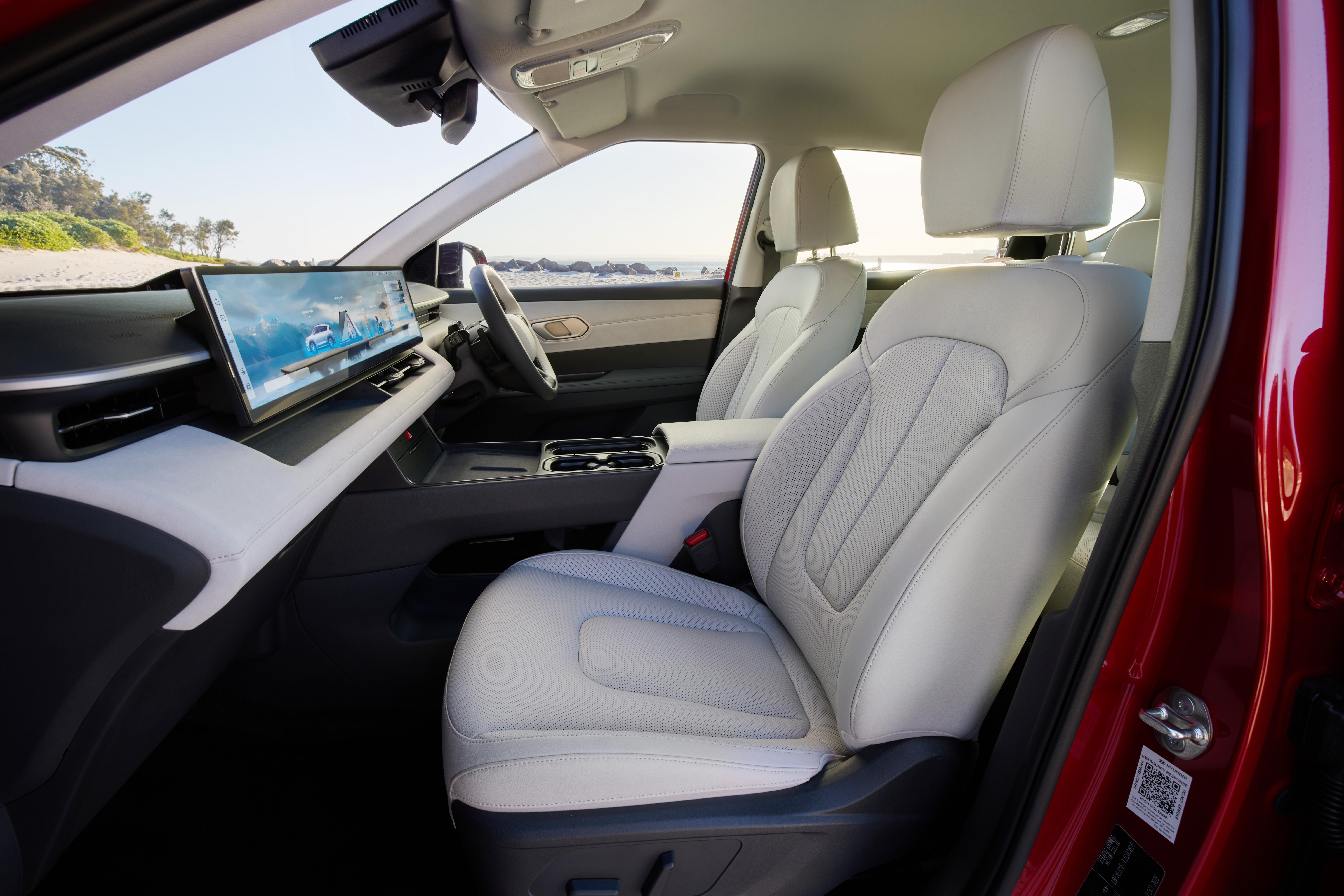
While some of its glossy capabilities are great, there are some parts that lack polish or thought, at least in my opinion.
For example, having wireless Apple CarPlay and Android Auto is handy, but it’s not properly integrated into the display, showing up in a pop-up style window as you can see above. It works fine once there, though.
The other thing is the touchscreen-embedded climate controls, which are quite fiddly. There are toolbars on either side of the screen for the driver and front passenger to access virtual shortcuts, but trying to change anything climate-related on the move is fiddly and distracting.
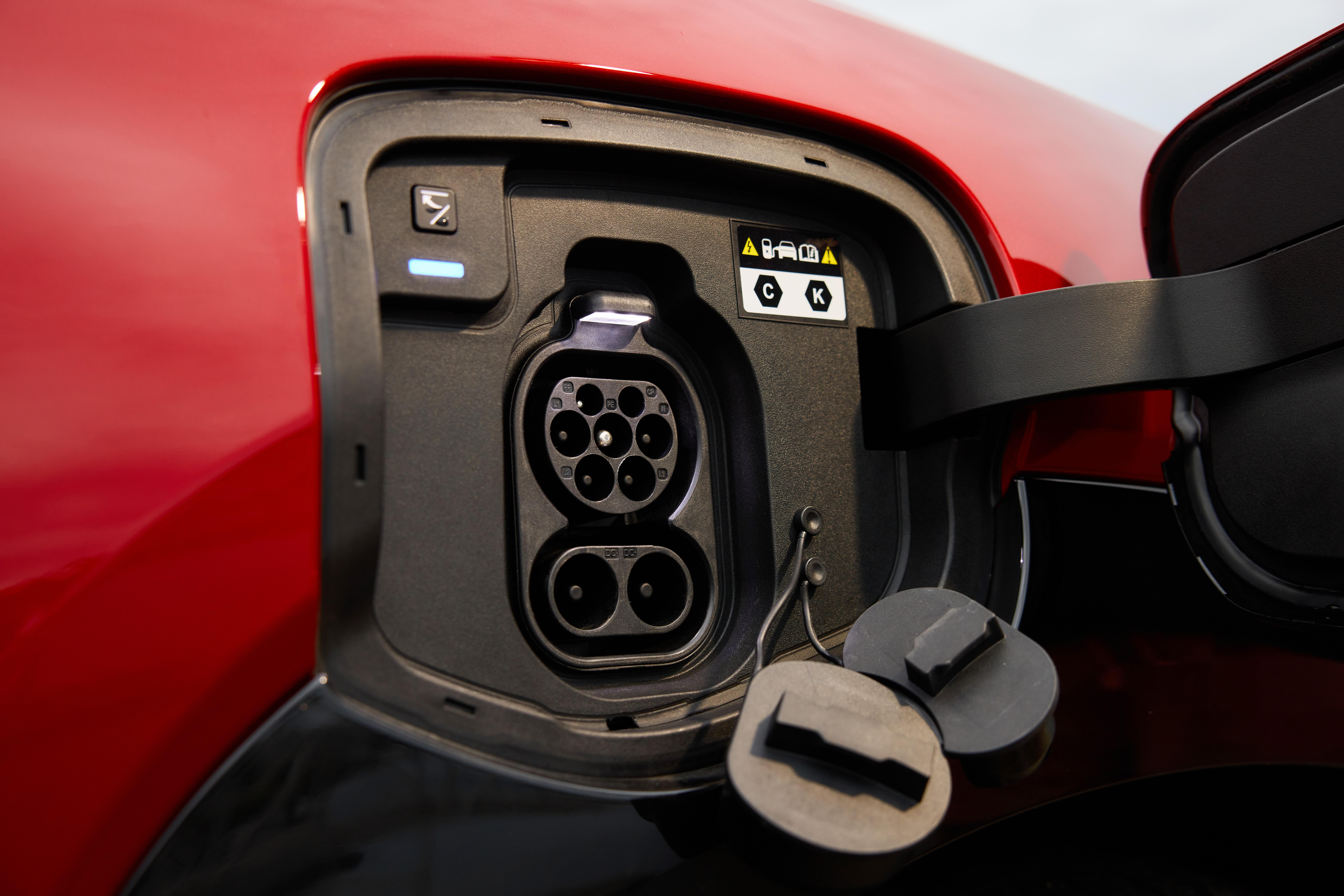
There’s also a very Tesla- and Chinese-esque 3D model that controls vehicle functions when stationary, allowing you to open the doors, tailgate and charge port. I think this would be smarter as a main screen widget rather than a little driver’s one, but I guess it’s within easy reach if you’re the only one in the car.
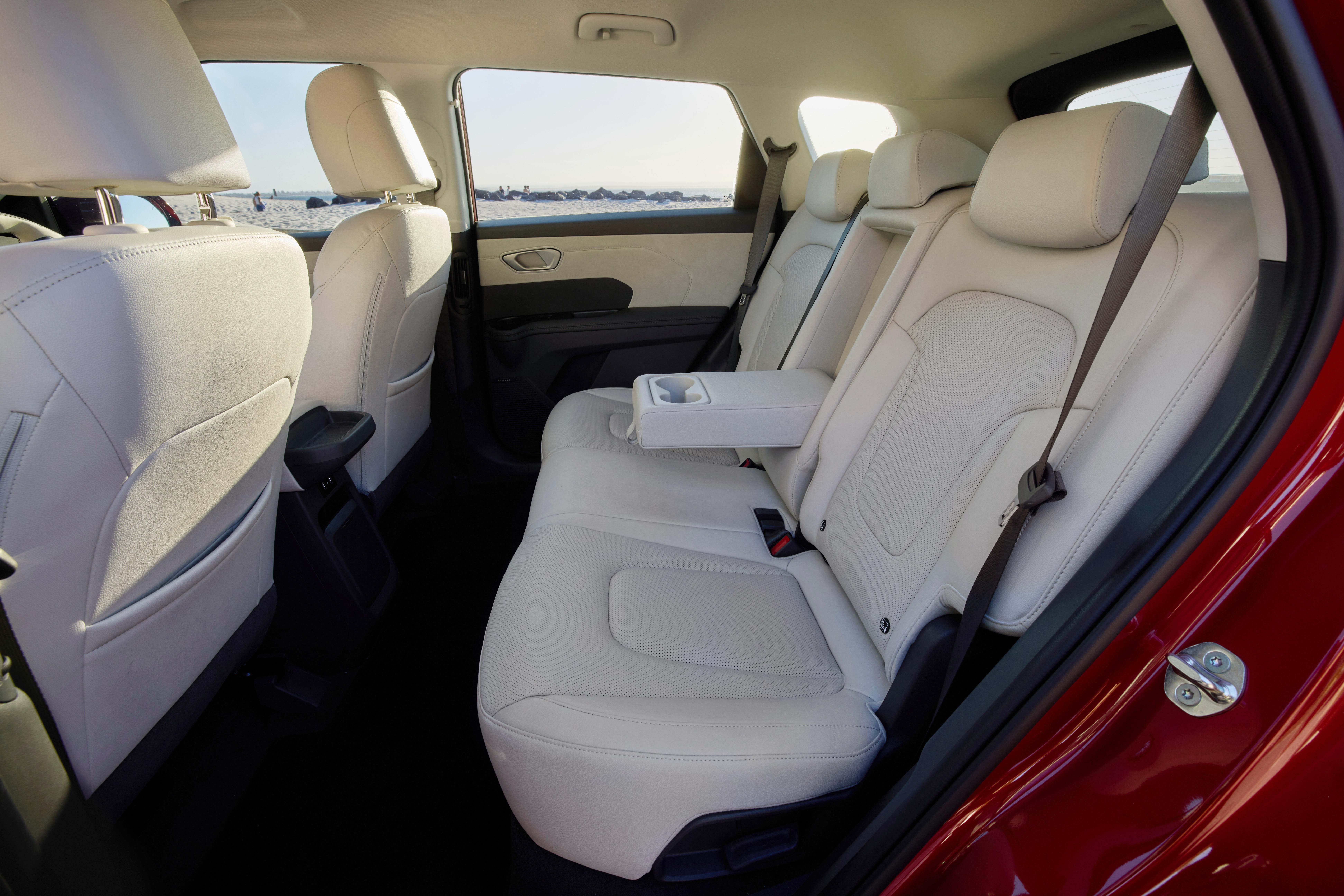
The Elexio’s second row is good for the segment, with solid head, leg and knee room, and a wide enough bench to seat three across if you need – plus the middle seat and floor are nicely flat for that sort of arrangement.
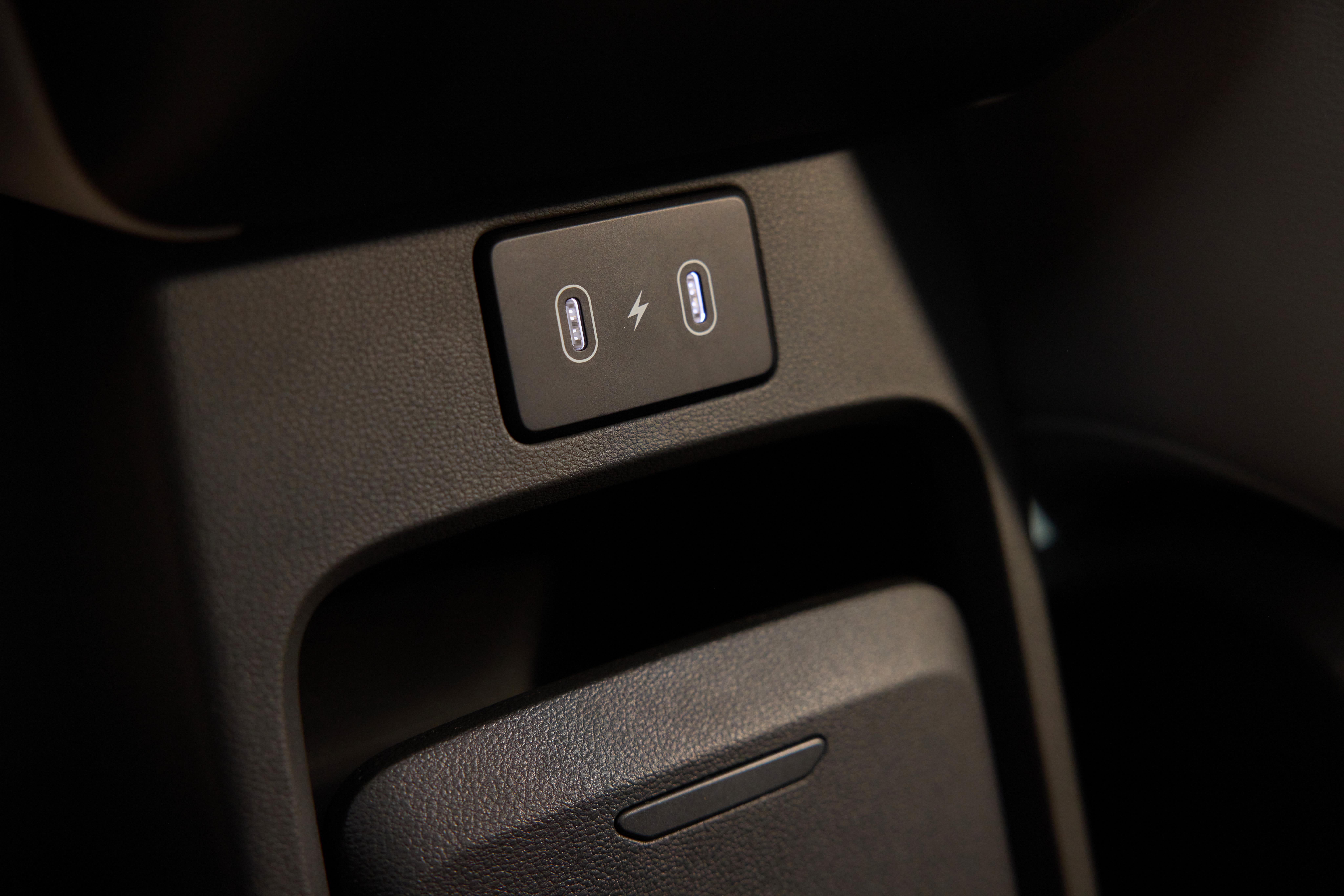
You get rear air vents in the pillars, a pair of USB-C charging ports for phones or portable devices, and little storage pockets behind the front seats and under the aforementioned charge ports.

The Elexio also gets door-mounted bottle holders in the armrest and in the lower sections, and there's the same material quality on the front and rear doors, unlike in some other mid-size SUV rivals.
Parents will also make use of the ISOFIX child seat anchors for the outboard positions and the top-tethers across the backs of all three, and the tall and upright windows let plenty of light in. Oddly though, there’s no option for a sunroof, which could be a good or bad thing depending on who you ask.
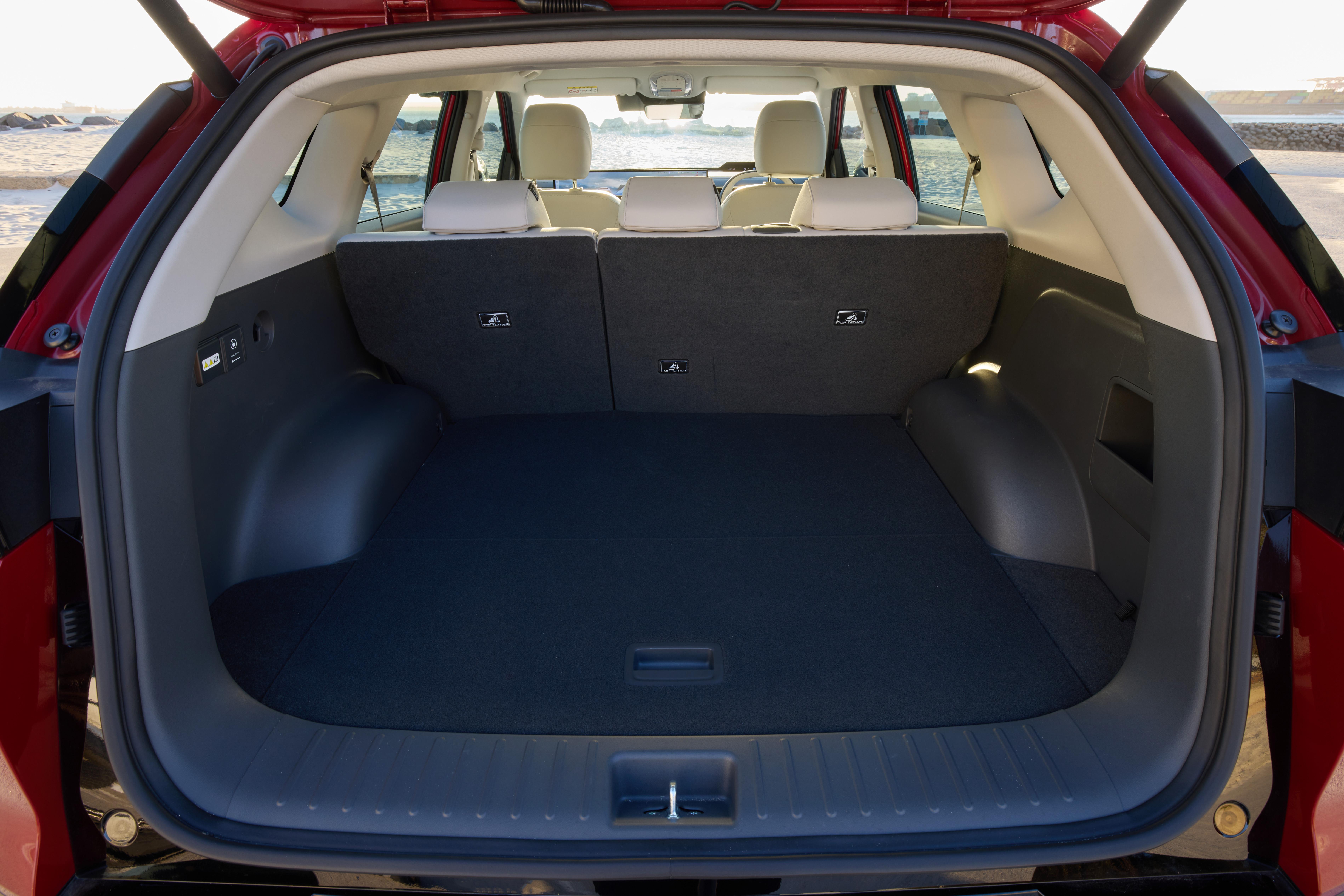
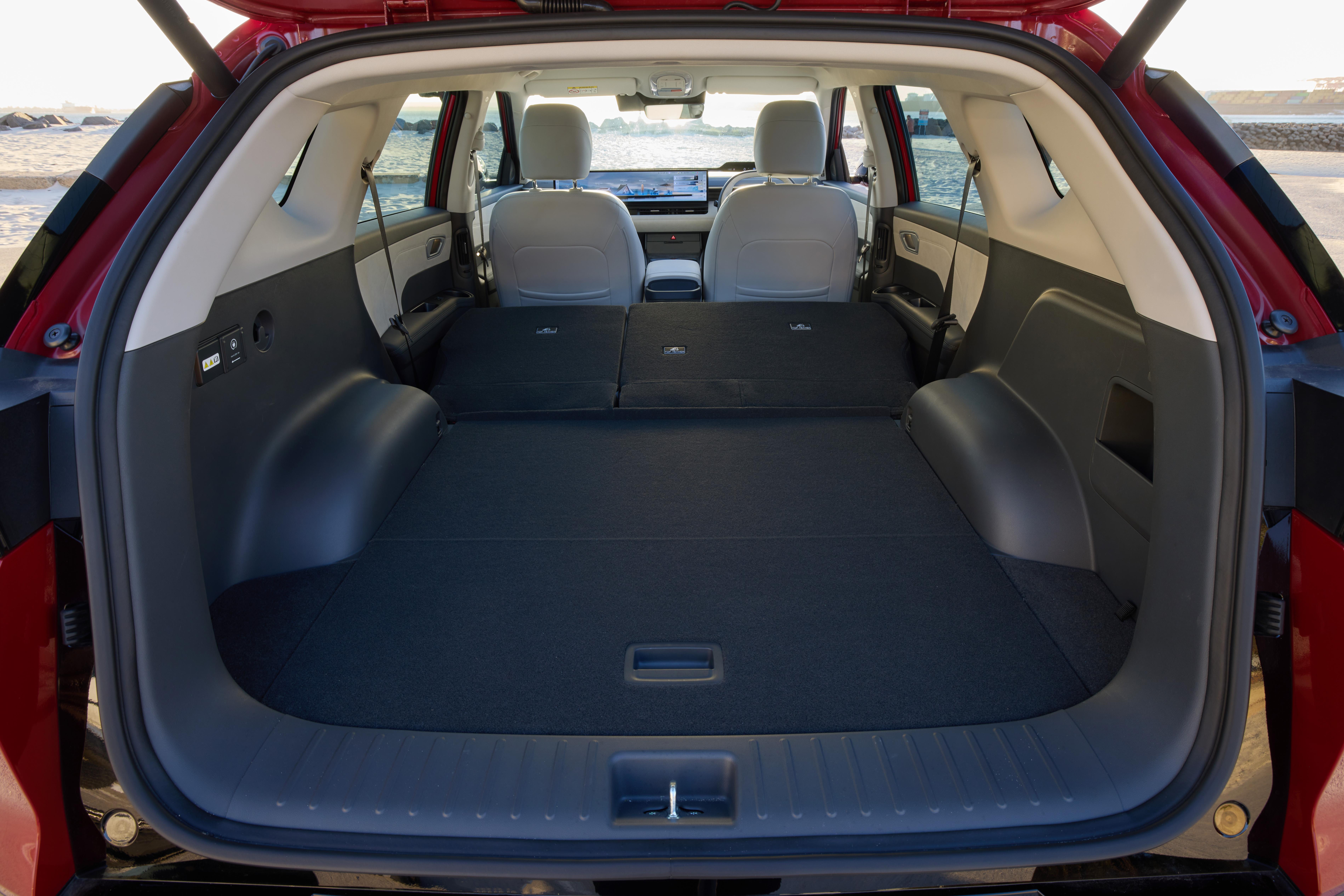
Further back there’s 506 litres of cargo space (VDA) with the second row in use, expanding to 1540L with them folded pretty much flat.
The Elexio doesn’t offer a spare wheel like some of Hyundai’s other electrified models, instead making do with a tyre repair kit.
| Dimensions | Hyundai Elexio |
|---|---|
| Length | 4615mm |
| Width | 1875mm |
| Height | 1695mm |
| Wheelbase | 2750mm |
| Cargo capacity | 506-1540L (VDA) |
To see how the Hyundai Elexio lines up against the competition, check out our comparison tool
What’s under the bonnet?
At launch, just one powertrain and battery variant will be available across all trim levels.
| Specifications | Hyundai Elexio |
|---|---|
| Drivetrain | Single-motor electric |
| Battery | 88.1kWh LFP |
| Power | 160kW |
| Torque | 310Nm |
| Drive type | Front-wheel drive |
| Weight | 2080-2105kg |
| 0-100km/h (claimed) | – |
| Energy consumption (claimed) | 18.2kWh/100km |
| Energy consumption (as tested) | 20.2kWh/100km |
| Claimed range | 546-562km – WLTP |
| Max AC charge rate | 10kW |
| Max DC charge rate | 122kW |
Our indicated energy consumption figure was achieved over 100km of mixed driving, favouring 110km/h freeway and hilly B-roads. No doubt in urban scenarios the figure would drop below the combined claim.
Hyundai says the Elexio will recharge from 10 to 80 per cent in as little as 38 minutes using a 150kW DC fast-charger, though the quoted charge capacity is 122kW according to the spec sheet. Funnily enough, Kia quotes the same time to charge on a 350kW charger, as per the EV5 spec sheet.
It’s a bit lower than the Elexio’s rival from its battery supplier, BYD, with the Sealion 7 quoting a 150kW DC ceiling.
Further, the higher-spec Elite with its larger 20-inch alloys quotes 546km of range according to WLTP testing, while the incoming ‘Elexio’ base grade quotes a marginally longer 562km range thanks to its smaller 18-inch rolling stock.
To see how the Hyundai Elexio lines up against the competition, check out our comparison tool
How does the Hyundai Elexio drive?
Our launch drive took us from Macquarie Park in Sydney through to Gosford via Laguna, and then back the following day. The route included a good mix of urban, freeway, country highway and B-road running to test the Elexio on.
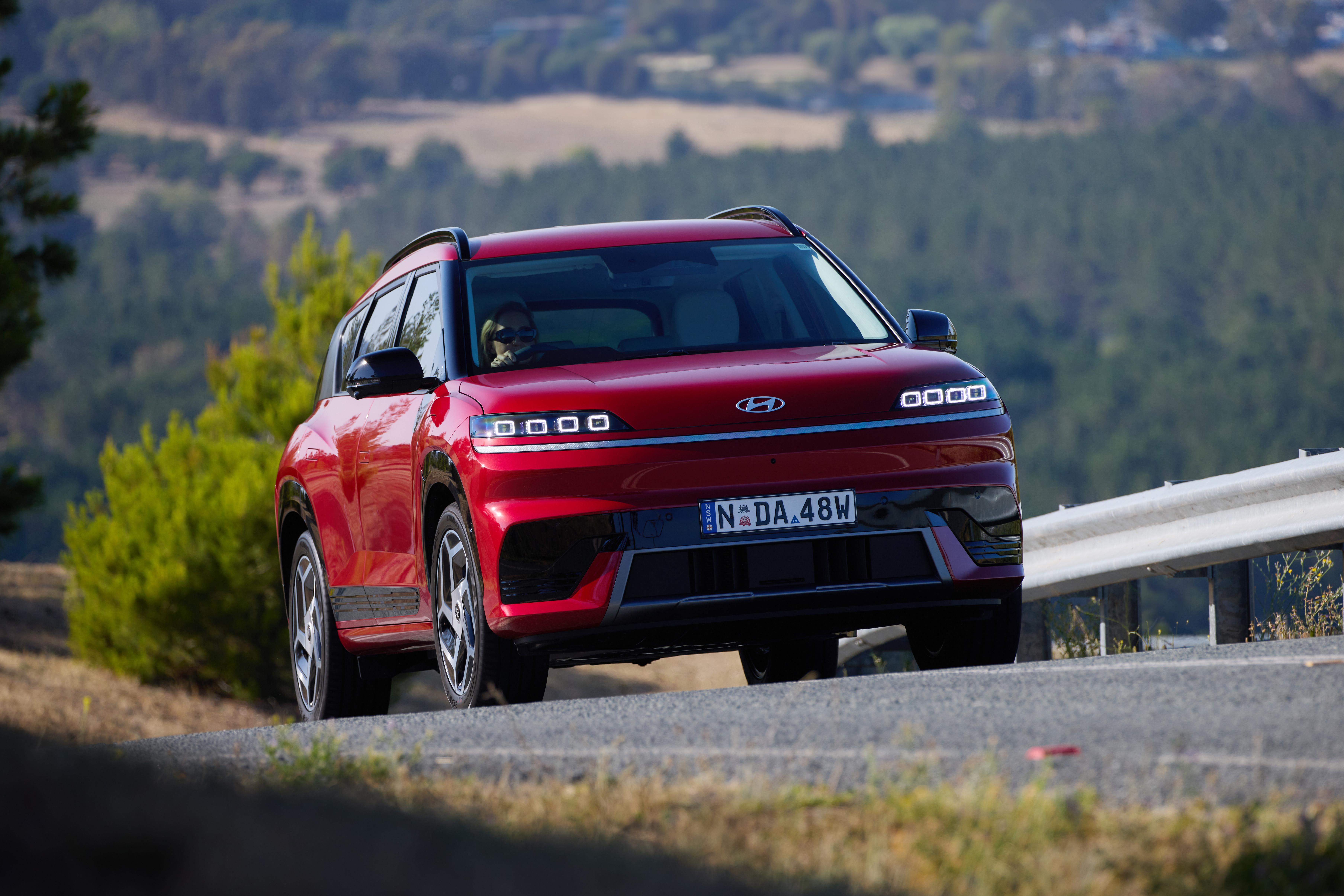
I personally was quite disappointed by the closely related Kia EV5 when I drove the Earth AWD some months ago, and while Hyundai didn’t explicitly say its local chassis tuning team paid attention to media feedback about the Elexio's sister model, no doubt they went for something a bit different.
Hyundai said the brief for the Elexio’s local tuning program was to achieve the company’s ‘signature style’, which balances general comfort with confident roadholding and neutral dynamics, which to be fair suits the Elexio’s brief as a more urban-leaning electric family SUV.
That feel became quite apparent pretty quickly after leaving Hyundai Australia’s head office in Macquarie Park, with the Elexio not trying to fool you into thinking it’s sporty and instead offering consistent and accurate response, while also ironing out the lumps and bumps of everyday driving conditions.
The steering is reasonably light but offers decent feedback, so you know what’s going on at the front axle, while even on 20-inch alloy wheels the Elite offers pretty solid ride comfort and general refinement from road noise – even at 110km/h on the Pacific Highway.
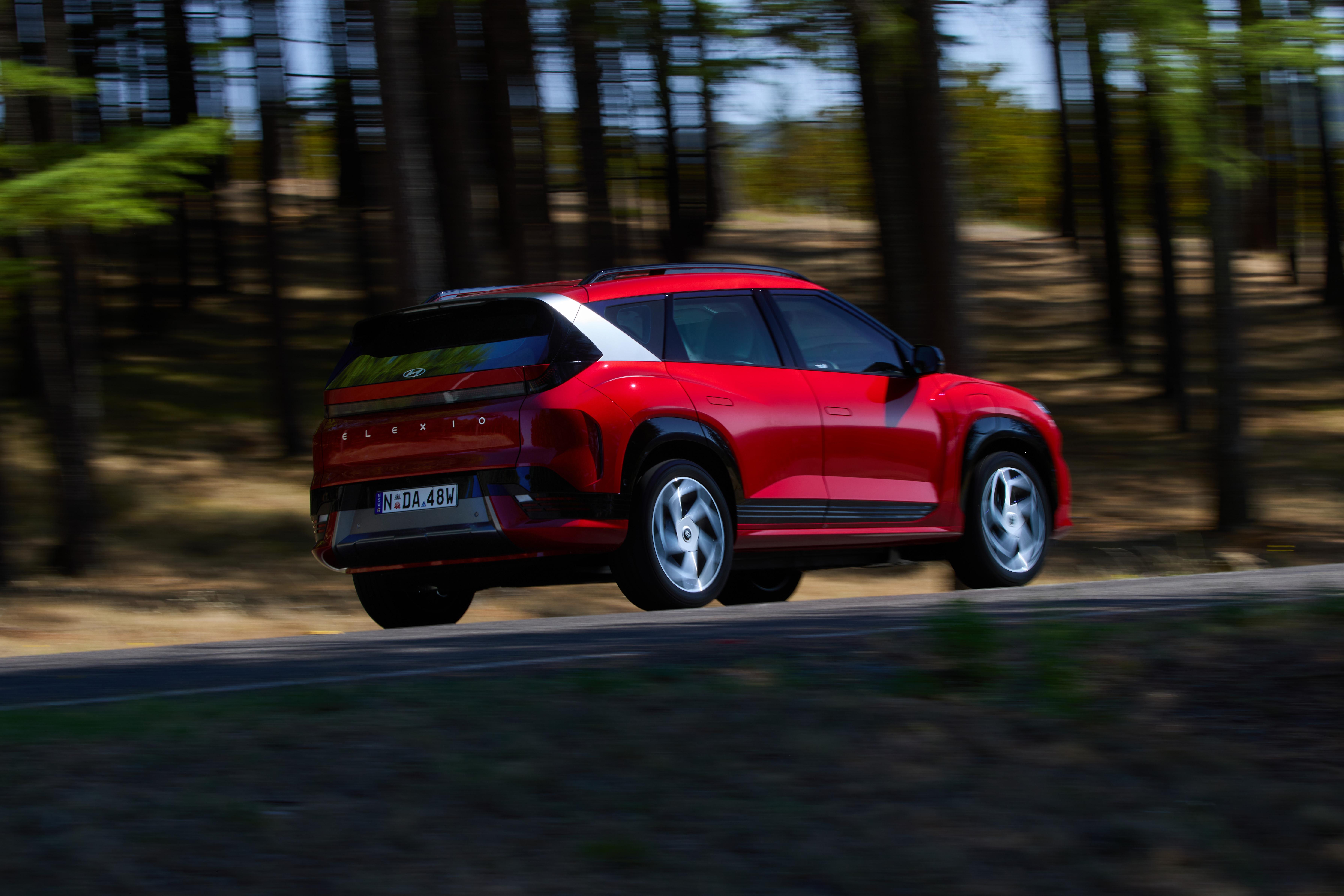
Some may think that outputs of 160kW/310Nm via the front wheels sounds uninspiring, but it’s more than adequate grunt to get the Elexio’s 2.1-tonne mass moving with decent urgency. Just don’t expect acceleration to be… ludicrous.
It feels as quick, if not quicker, than a Tucson Hybrid (HEV), and you don’t get any engine noise other than the faint whirr of the electric motor under load. Of course, at lower speeds you get a UFO-like sound generator to warn pedestrians.
Hyundai doesn’t actually quote a 0-100km/h acceleration time for the Elexio, but we imagine it’s similar to the EV5 Long Range 2WD’s claim of “approximately 8.9 seconds”, given the shared drivetrain and close similarities between the two vehicles.
Even uphill at highway speeds, the Elexio feels far from underpowered or out of breath, helped by the fact all 310 Newton-metres are on tap from the moment you hit the throttle.
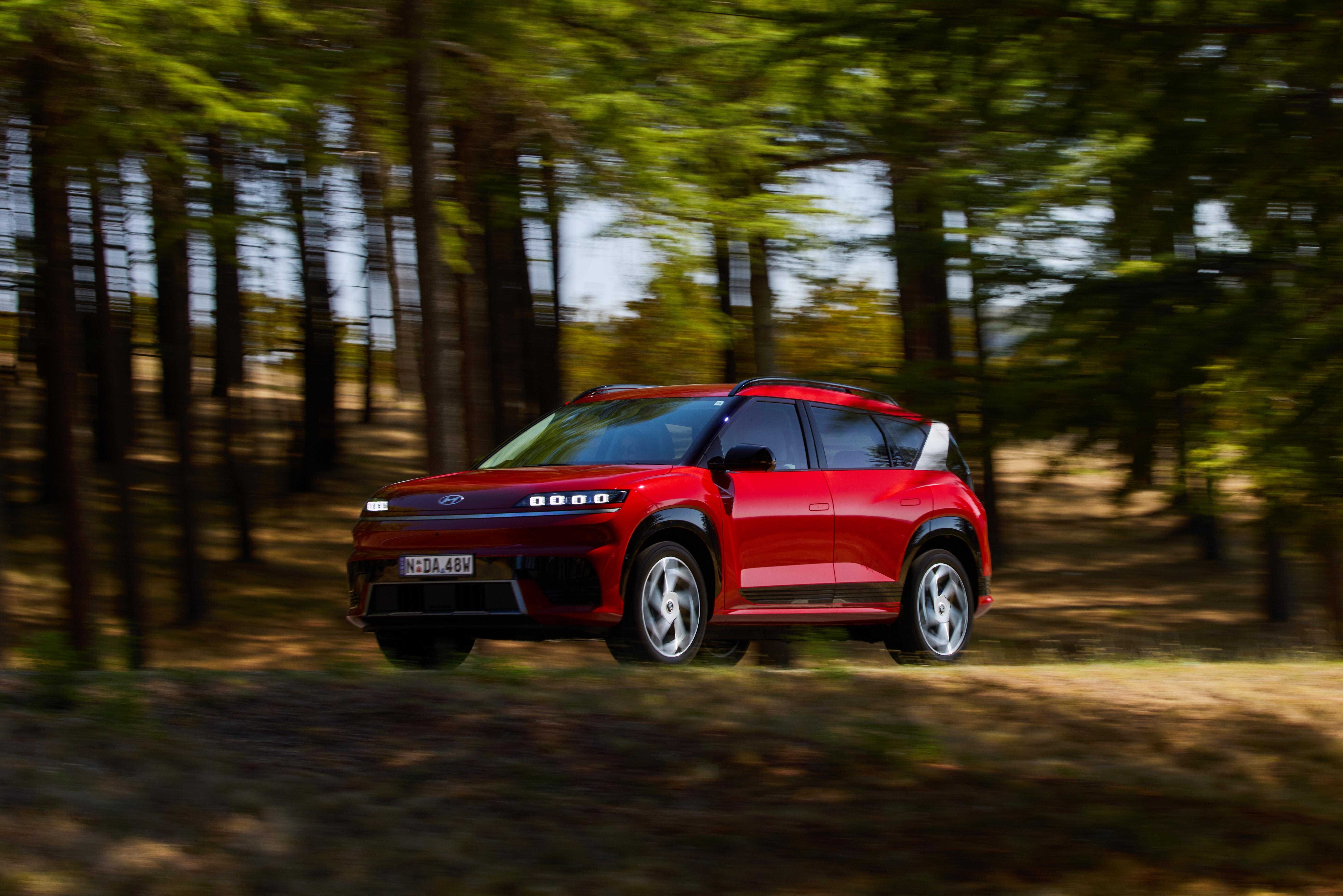
As we approached the town of Laguna after turning off the Pacific Highway, the winding high-speed B-roads served as a good ride and handling test.
Thin lane markings, pockmarked surfacing and a mix of bends were probably all a bit more than the Elexio is ever going to be subjected to, but I was pleasantly surprised by the overall competence and polish of the vehicle’s handling, even if it wasn’t super-engaging or dynamic in feel.
Accurate steering, good grip levels and strong torque response give the Elexio a solid resume on paper, but even in its Sport mode it’s far from ‘sporty’ in terms of performance or feel. Like I noted earlier, Hyundai wanted its signature style baked in, which is more balanced and neutral rather than leaning into either plush comfort or hard-edged dynamism.
Still, it’s a confident drive that isn’t so loose or wobbly that it feels uncomfortable or underdone in these environments, something that can’t be said for a number of Chinese-branded rivals. So the Elexio gets a solid above-average grading here.
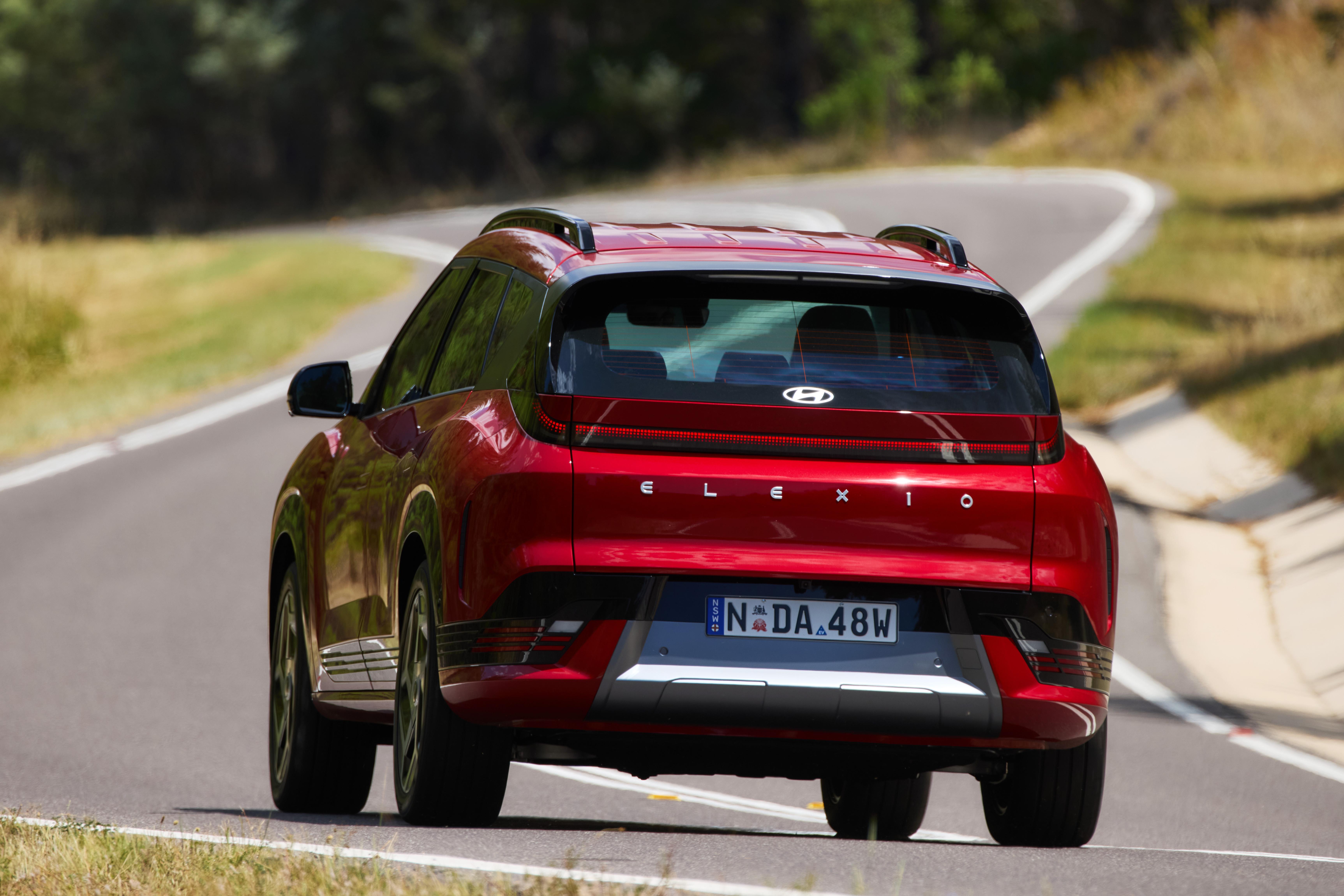
Driver assistance features in the Elexio feel more Hyundai than Chinese, in that they’re generally well-calibrated save for the few bings and bongs that I could live without.
Adaptive cruise control and lane-centring assist combine to form Hyundai/Kia’s navigation-based Highway Driving Assist (HDA) semi-autonomous function, which does a pretty intuitive job of maintaining a set speed and a safe distance from the vehicle in front.
That said, the lane-keep assist function proved a little overzealous on the B-road portion, jerking the steering wheel left and right on skinny back-roads to avoid the centre line, then the road edge, and soon.
The annoying audible overspeed alert can be quickly silenced with a long press of the mute button, and in my time with the vehicle I didn’t have any notable issues with the driver attention monitor unless I looked at the mirrors or central display for too long.
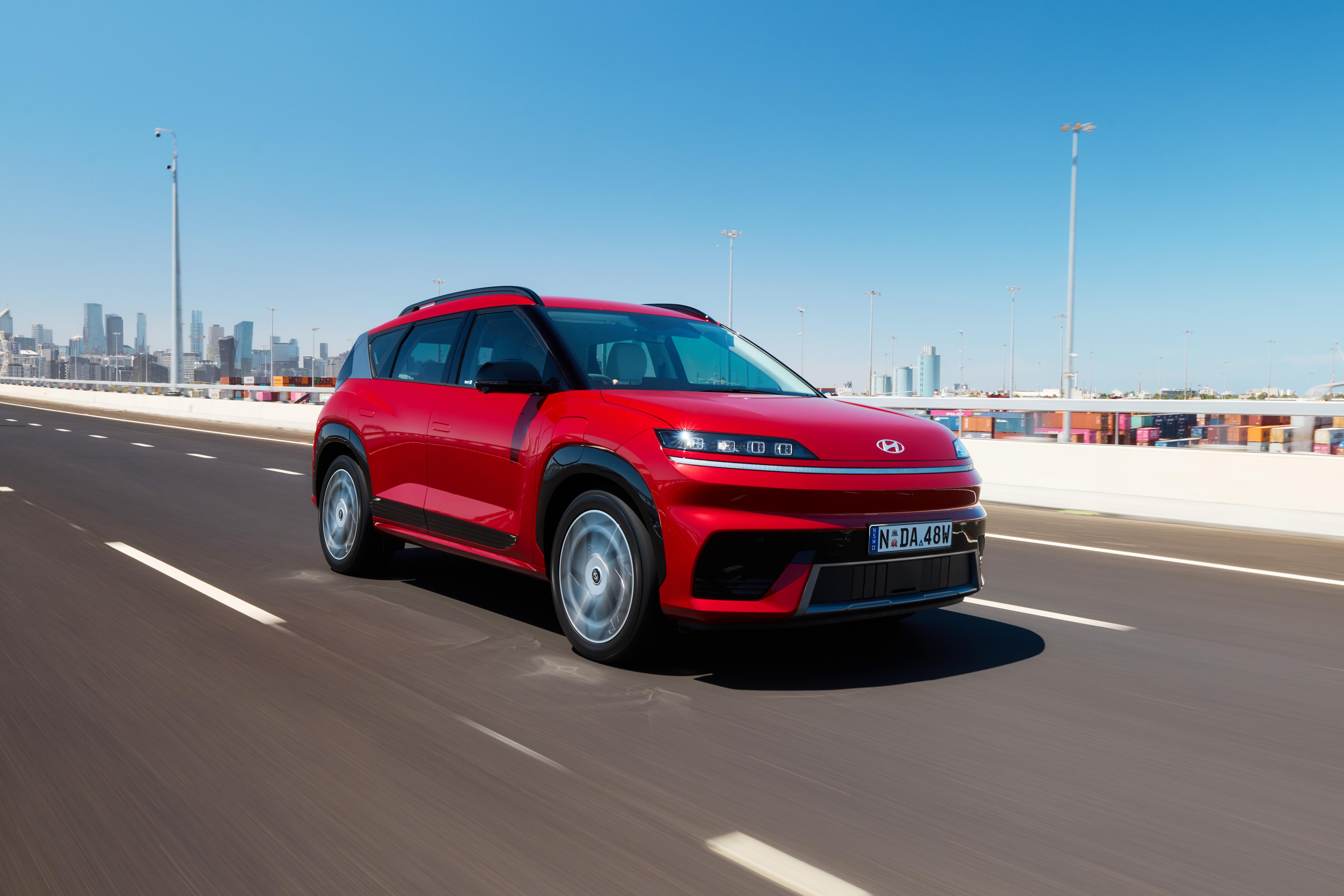
I think it’s worth talking about the driver displays here, given we’re on the topic of… erm… driving.
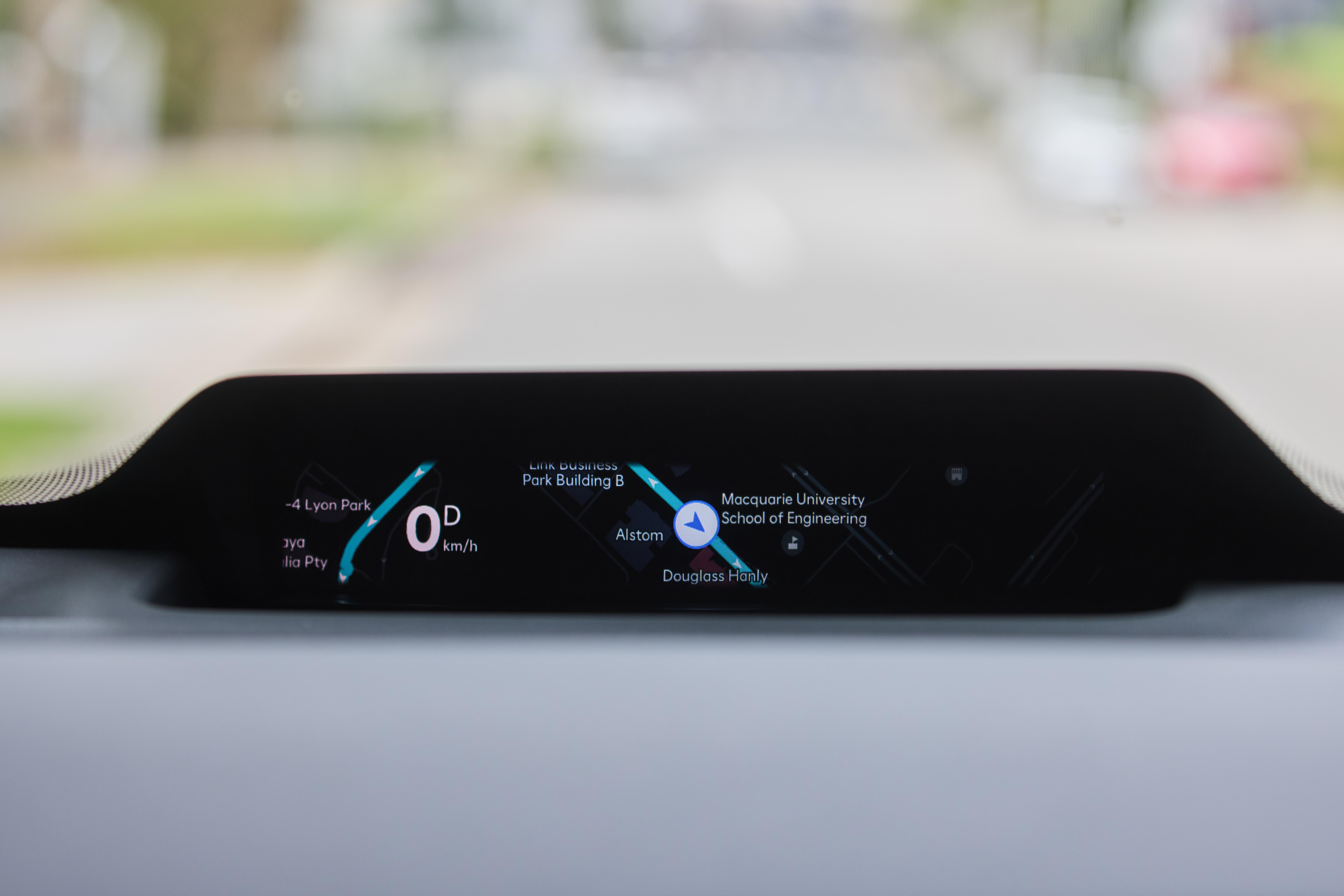
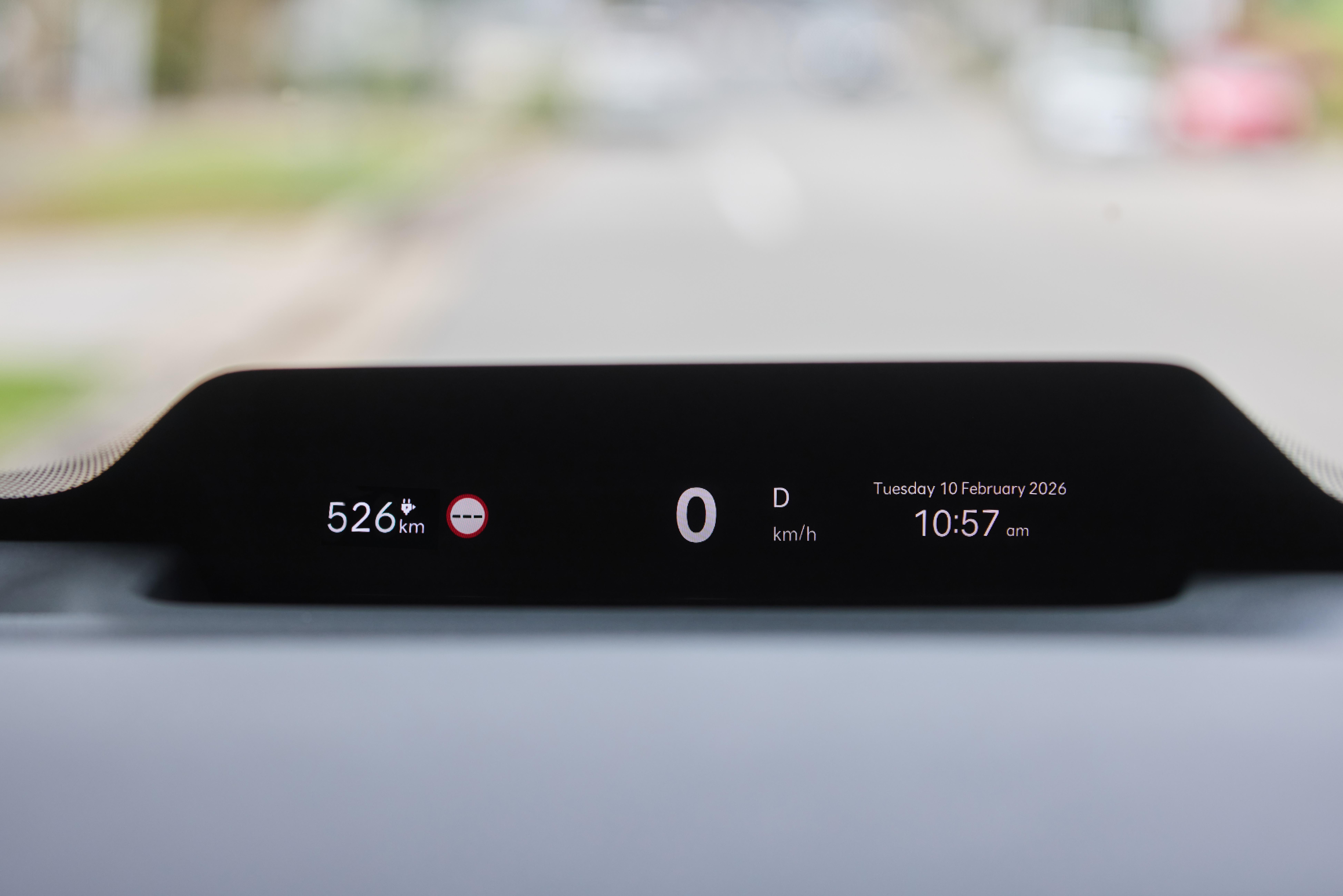
For some reason I thought the simple driver display at the base of the windscreen was an actual screen, but it’s actually a head-up display projection. It’s a neat piece of design and offers a few views for added functionality, but if you wear polarised sunglasses it might get a little hard to see.
So then your main option is the Tesla-style window on the driver’s side of that panoramic infotainment display. As with a number of rivals, it shows a real-time infographic of the assistance systems as well as a large digital speedo, but it’s pretty low-set and out of the general line of sight, which isn’t particularly ergonomic.
All told though, the general driving experience is fine, and it seems Hyundai has done the right work in the right areas to make the Elexio behave as closely to its Korean and European-sourced products as possible, largely thanks to software and despite the distinctly Chinese hardware.
To see how the Hyundai Elexio lines up against the competition, check out our comparison tool
What do you get?
While the Elexio will launch solely in higher-spec Elite guise, a more fleet-focused base variant is coming soon without some of the flagship's more luxurious convenience features
2026 Hyundai Elexio equipment highlights include:
- Long Range 88.1kWh Battery
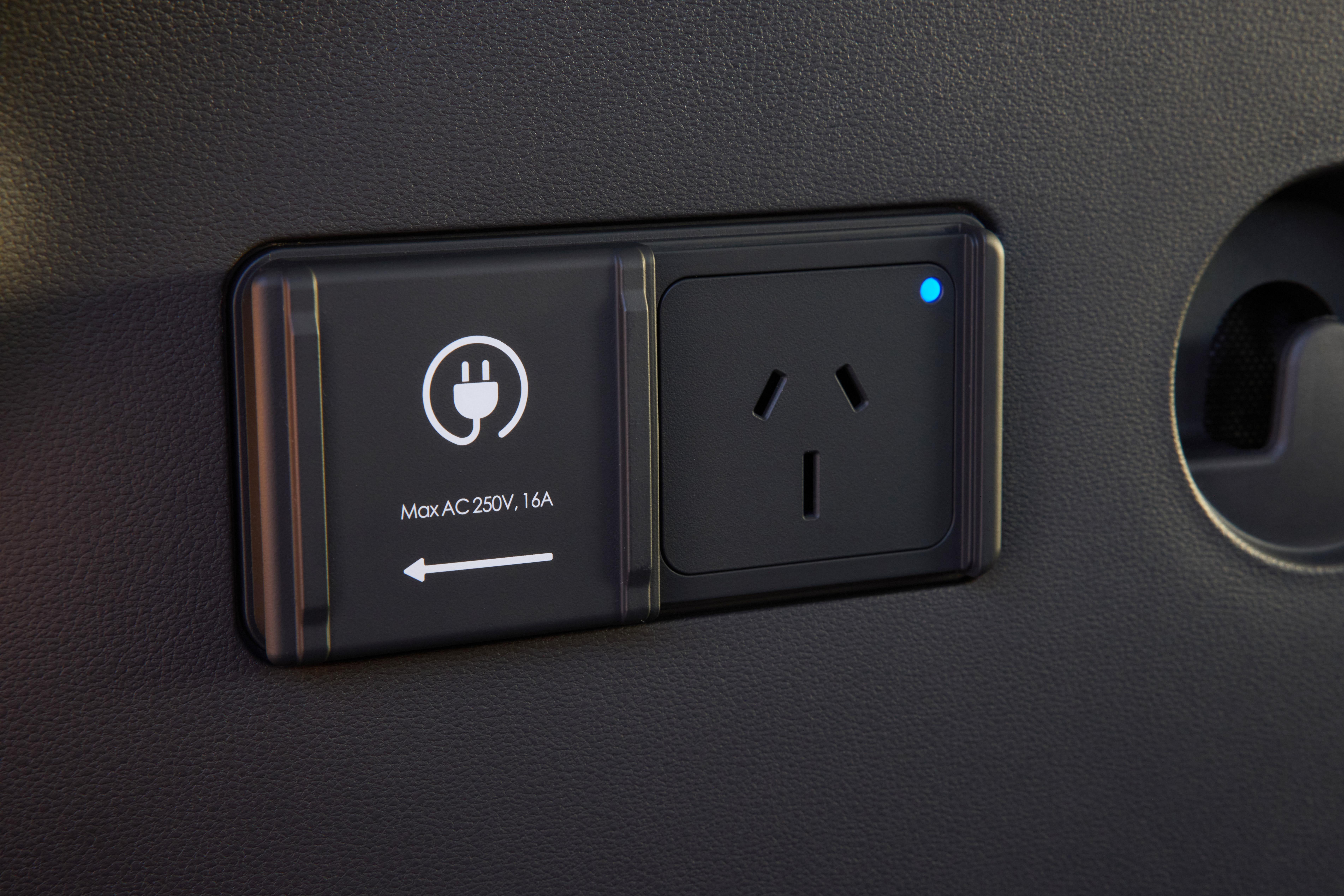
- Vehicle-to-Load (V2L) charging capability
- 10-80 per cent 150kW DC fast-charging in 38 minutes
- Paddle shifters for regenerative braking
- 18-inch alloy wheels
- Tyre mobility kit
- 9 airbags (front, front and rear side, curtain, front-centre)
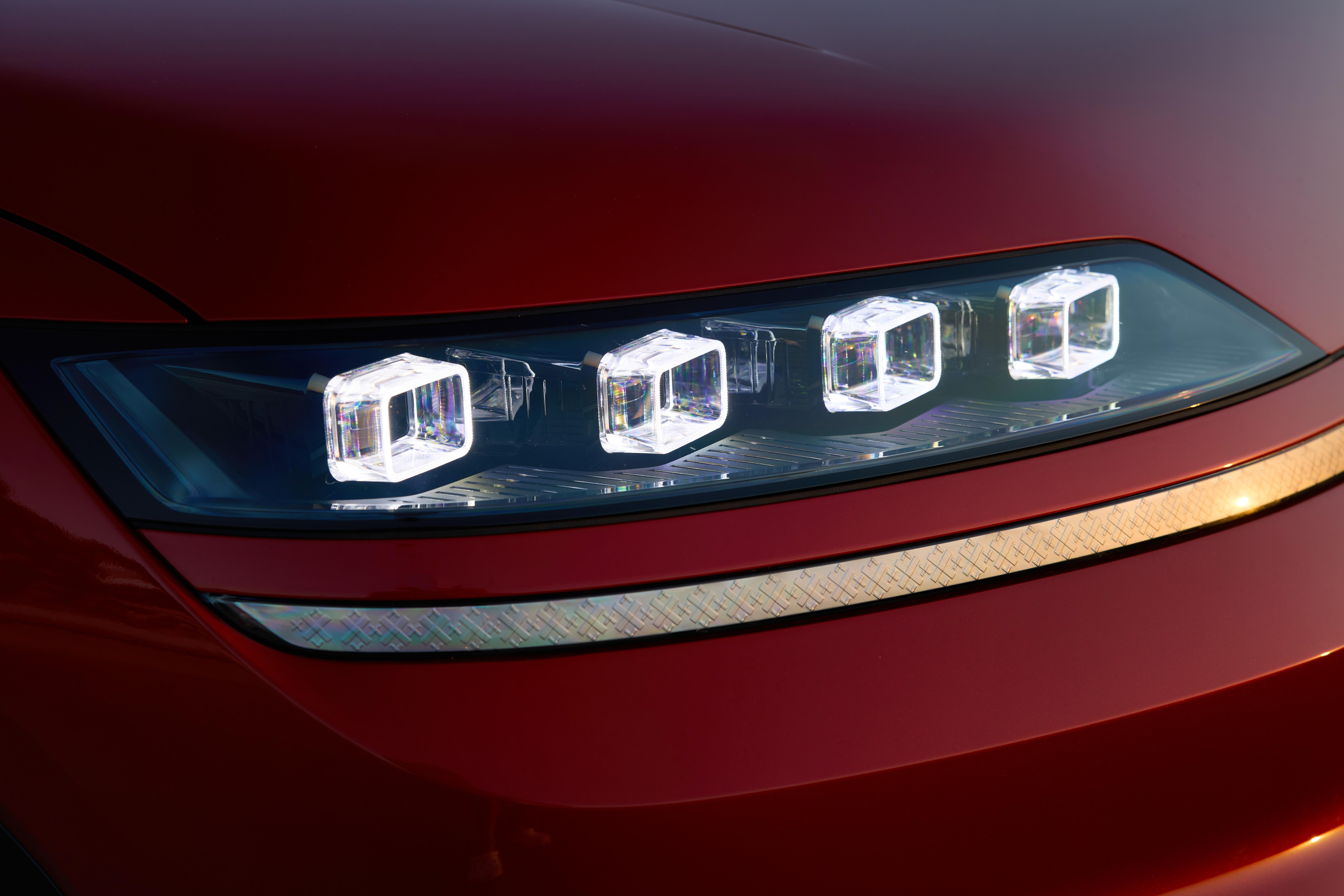
- LED projector beam headlights
- LED tail-lights
- Rain-sensing wipers
- Cloth upholstery
- Rear lower drawer compartment
- 6-way power-adjustable driver's seat
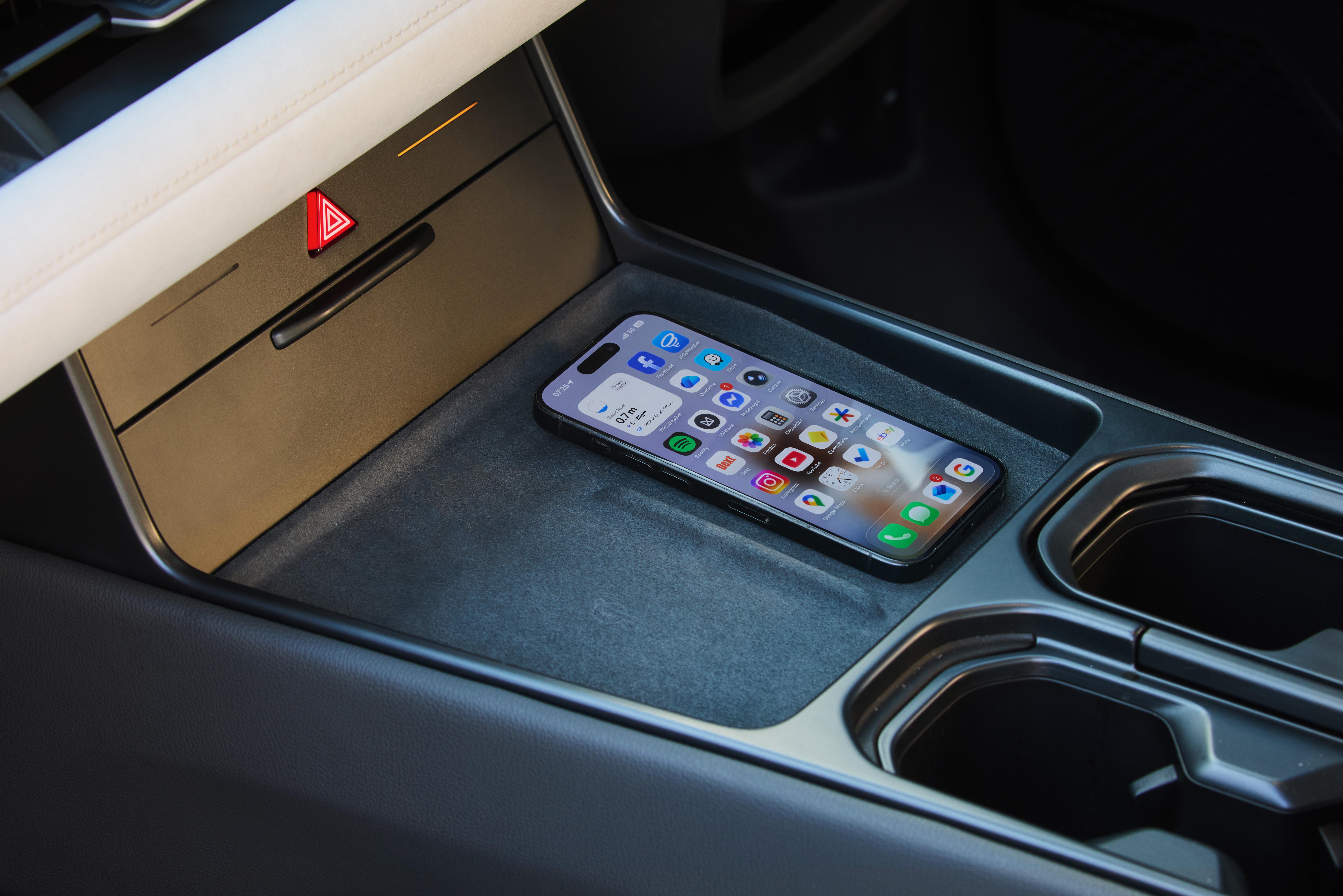
- 1 x wireless phone charger
- 40:60-split/folding rear seat
- LED interior lights
- Leather-wrapped steering wheel
- 27-inch Connect-C System
- Hyundai Bluelink connected services
- Digital Key 2 Touch
- Head-up display (HUD)
- Electrochromic interior mirror
- Remote Smart Parking Assist
Elexio Elite adds:
- 20-inch alloy wheels
- Leather-appointed seat trim
- Heated front seats
- Ventilated front seats
- Heated steering wheel
- Hands-free power tailgate
- 2 x wireless phone chargers
- Driver’s seat – 14-way power-adjustable
- Passenger seat – 4-way power-adjustable
- Integrated Memory Seat (IMS)
To see how the Hyundai Elexio lines up against the competition, check out our comparison tool
Is the Hyundai Elexio safe?
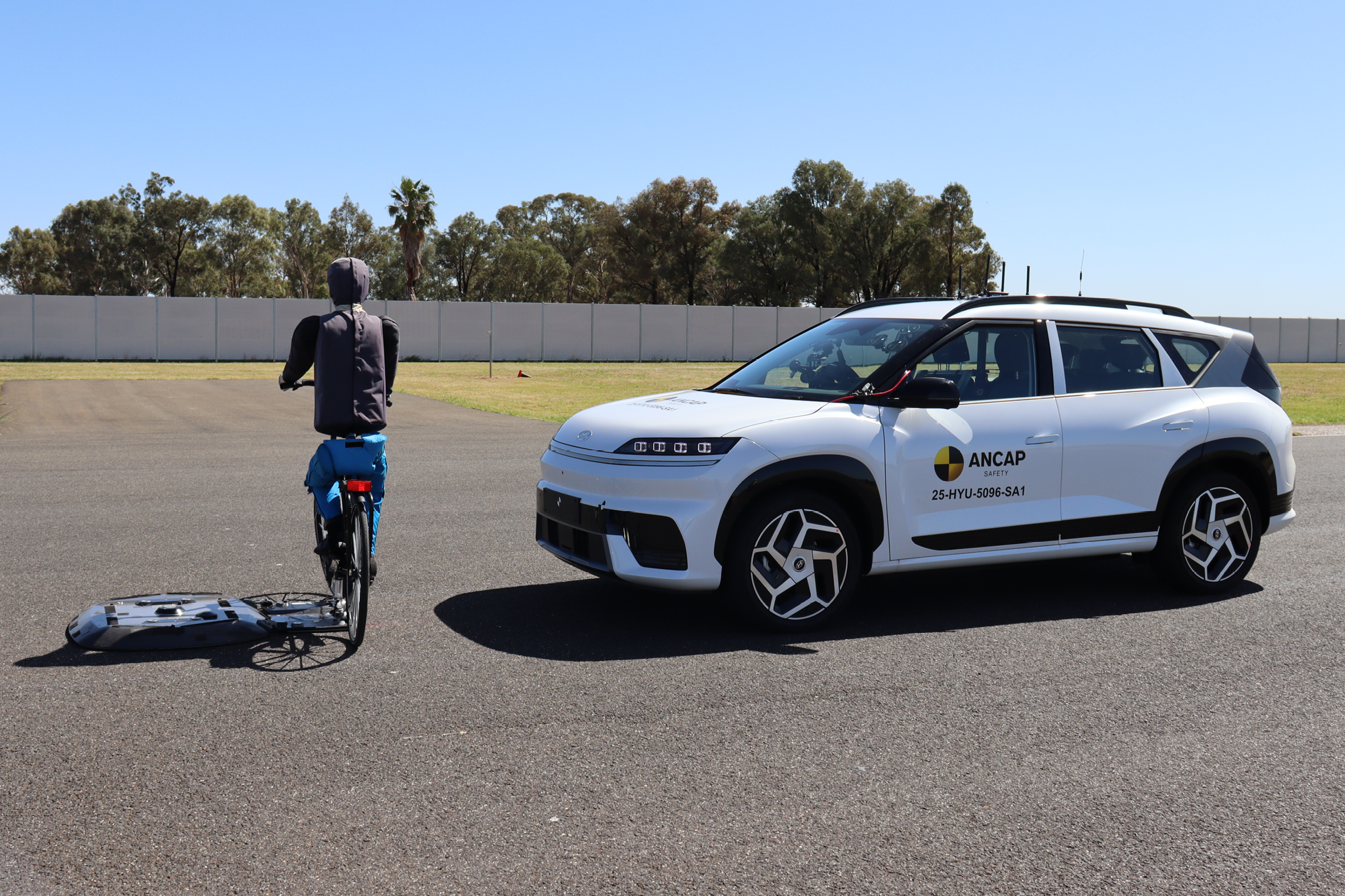
The Hyundai Elexio was recently awarded a five-star ANCAP safety rating based on testing of the related Kia EV5. ANCAP did, however, conduct additional safety testing of the Elexio’s active safety systems and pedestrian impact performance.
| Category | Hyundai Elexio |
|---|---|
| Adult occupant protection | 88 per cent |
| Child occupant protection | 86 per cent |
| Vulnerable road user protection | 77 per cent |
| Safety assist | 85 per cent |
Standard safety equipment includes:
- 9 airbags incl. front-centre
- Adaptive cruise control with stop/go
- Autonomous emergency braking
- Pedestrian detection
- Cyclist detection
- Junction turning and crossing assist
- Blind-spot assist
- Blind-Spot View Monitor
- Driver attention warning
- Highway Driving Assist 2
- Intelligent Speed Limit Assist
- Lane Following Assist 2 (lane-centring)
- Lane-keep assist with road-edge detection
- Parking Collision-Avoidance Assist (forward, side, reverse)
- Rear occupant alert (sensor-based)
- Rear cross-traffic assist
- Safe exit assist
- Surround-view camera
- Tyre pressure monitoring
To see how the Hyundai Elexio lines up against the competition, check out our comparison tool
How much does the Hyundai Elexio cost to run?
The Elexio is covered by Hyundai’s conditional seven-year, unlimited-kilometre new-vehicle warranty – provided you service within the brand’s network – while the EV battery is covered for eight years or 160,000km.
| Servicing and Warranty | Hyundai Elexio |
|---|---|
| Warranty | 7 years, unlimited kilometres – vehicle (conditional) 8 years or 160,000 kilometres – EV battery |
| Roadside assistance | 24 months, then service activated |
| Service intervals | 2 years or 30,000 kilometres |
| Capped-price servicing | Up to 4 years or 60,000km |
| Total capped-price service cost | $1897 – 4 years |
Service pricing has only been confirmed for the first four years of ownership, and only covers the first two visits given scheduled maintenance intervals are pegged at 24 months or 30,000km. Keep in mind Hyundai offers lifetime capped-price servicing across its range if you pay as you go.
That said, the $1897 cost for two services over four years is a little high, making the annual average $474.25. It’s one of the few cases where Hyundai charges more than Kia – the EV5 costs $1839 over five years, which includes five visits to the dealer given its 12 month/15,000km intervals.
To see how the Hyundai Elexio lines up against the competition, check out our comparison tool
CarExpert’s Take on the Hyundai Elexio
It’s no standout, but the Hyundai Elexio is one of the better mainstream electric SUVs now available in the mid-size segment.
The introductory drive-away pricing offer for the Elite represents decent value given the relatively fulsome equipment list, it drives well (noticeably better than the EV5), and it's well-packaged for Australian families looking for a mid-size SUV.
Cons? The Chinese-market tech hardware will take a little getting used to, the design is a little out there – but is reasonably handsome in isolation – and it doesn’t really stand out in any one area, given it’s priced higher than a number of Chinese-branded rivals.
But it seems the main aim of the Elexio is to give Hyundai a presence at the more attainable end of this segment, and a more accessible option for the fleet market, even if it’s not quite a price-leader.
The Ioniq 5 just can’t compete with the Chinese competition on price, and now consumers can walk into a Hyundai dealership and choose either a Tucson HEV or an all-electric Elexio for under $60,000 – and the company is also touting its more competitive novated lease pricing relative to competitors.
So why should you buy an Elexio? Well, you can think of it as an attainable Chinese challenger with the tech calibration and dealership support of an established legacy brand. I’d also argue that if you’re considering a Kia EV5, you should definitely be giving this new Hyundai a look.
Our verdict? One to consider amid the growing crop of mid-size electric SUVs, but not a top pick.
CarExpert can save you thousands on a new Hyundai Elexio. Click here to get a great deal.
Click the images for the full gallery
MORE: Explore the Hyundai Elexio showroom
Leave a Comment