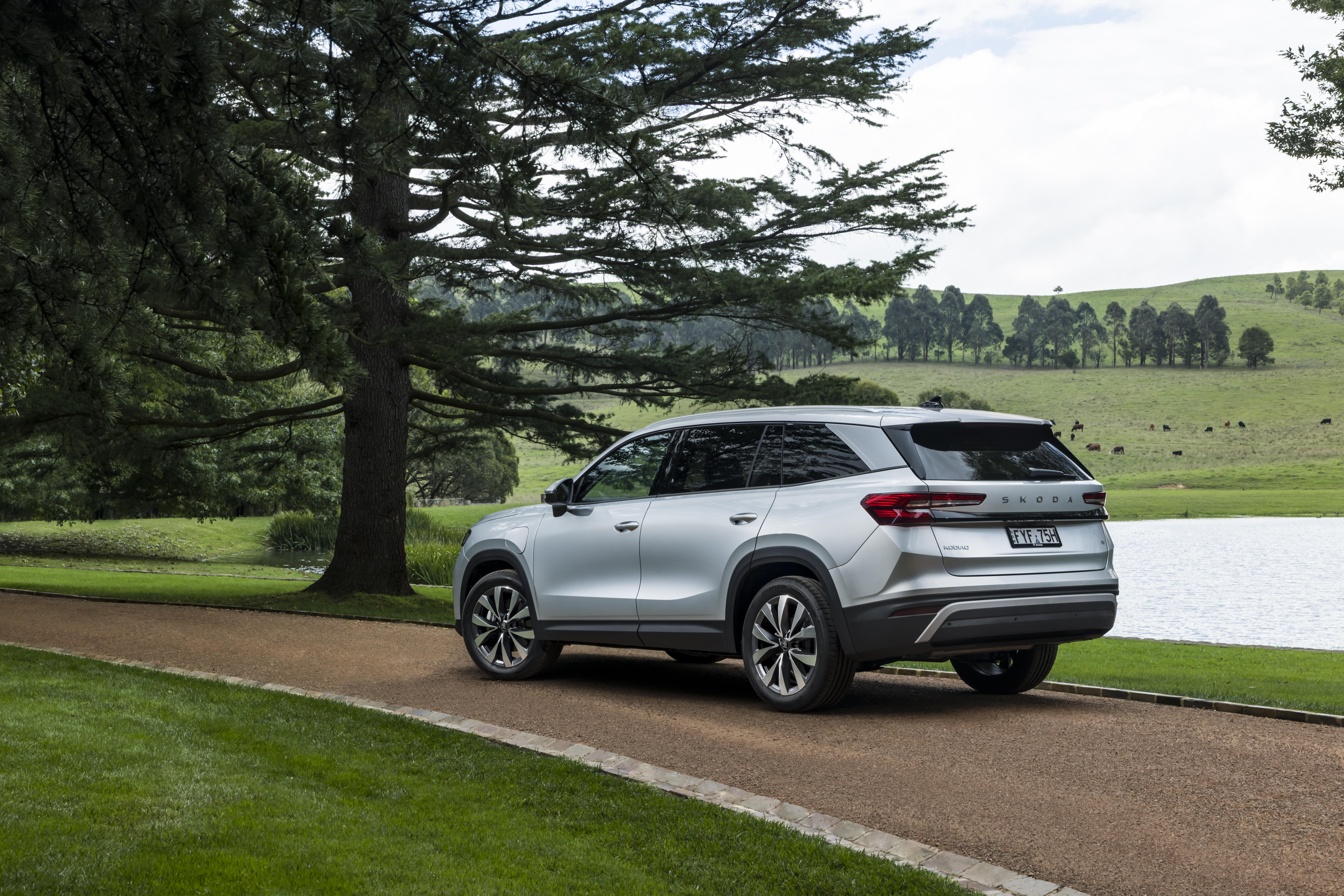
2026 Skoda Kodiaq Select PHEV review
Is the soaring cost of fuel in Australia hitting your hip pocket? Skoda has your back.
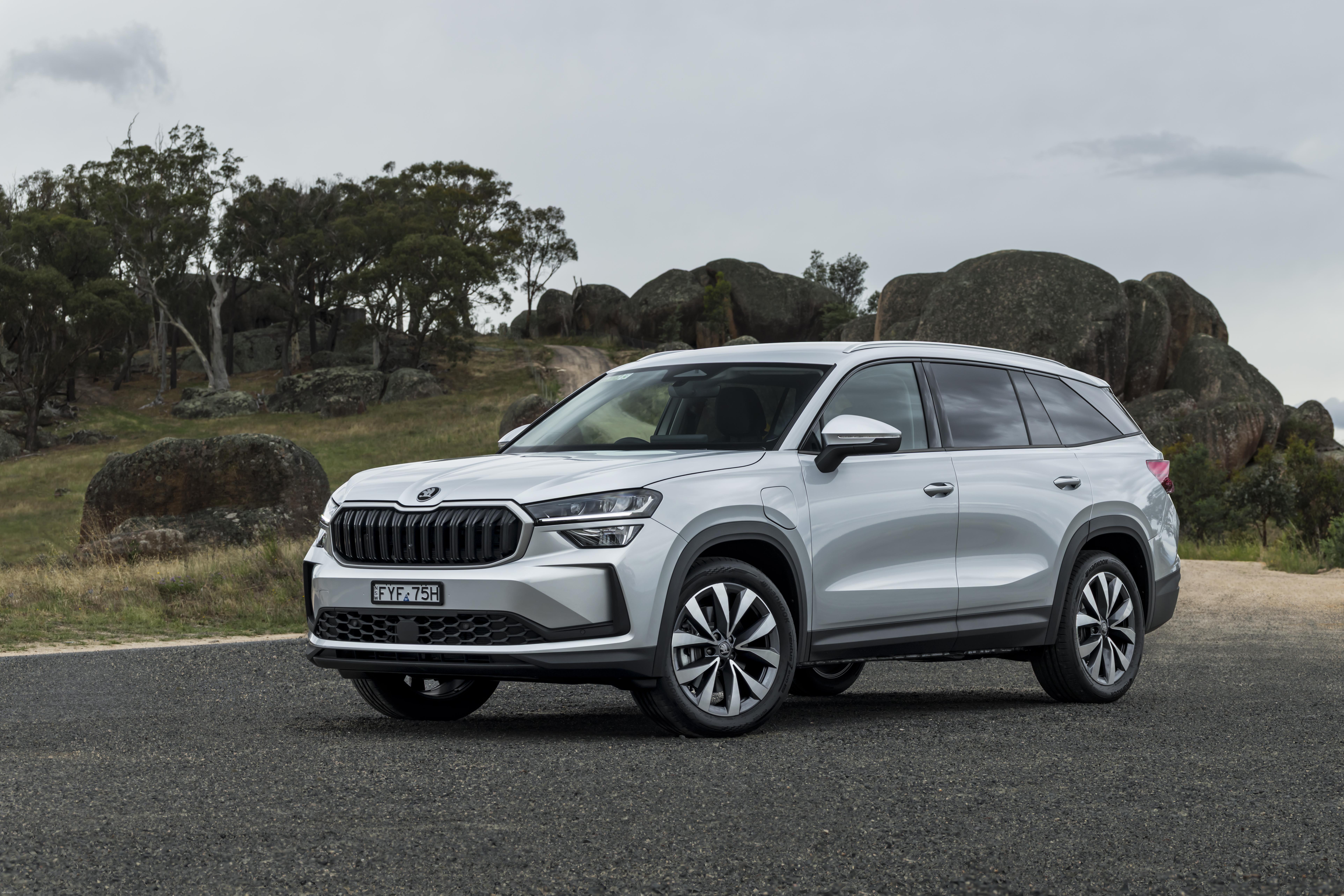
Despite initially lagging behind its rivals on electrification, the Czech automaker has spent the past 18 months expanding its local lineup to include the Elroq and Enyaq electric vehicles (EVs), the Octavia mild-hybrid (MHEV), and now plug-in hybrid (PHEV) versions of the Superb wagon and this – the Kodiaq large SUV.
As such, Australian Skoda customers now have access to an array of alternatives to petrol power, and the timing couldn’t be better – ongoing conflict in the Middle East has seen fuel prices rise substantially over the past month, and some service stations have even run out of fuel.
Which brings us back to the Kodiaq PHEV. Assuming you’ve got access to some form of renewable energy at home and don't need to travel very long distances, this dual-fuel family SUV can be run on electricity alone for the foreseeable future. Then, once conditions allow, you can go back to filling up with sweet 95-octane unleaded. The other option is to run it as a hybrid, in which case your wallet will still hold its weight better than it would driving a family SUV without electric assistance.
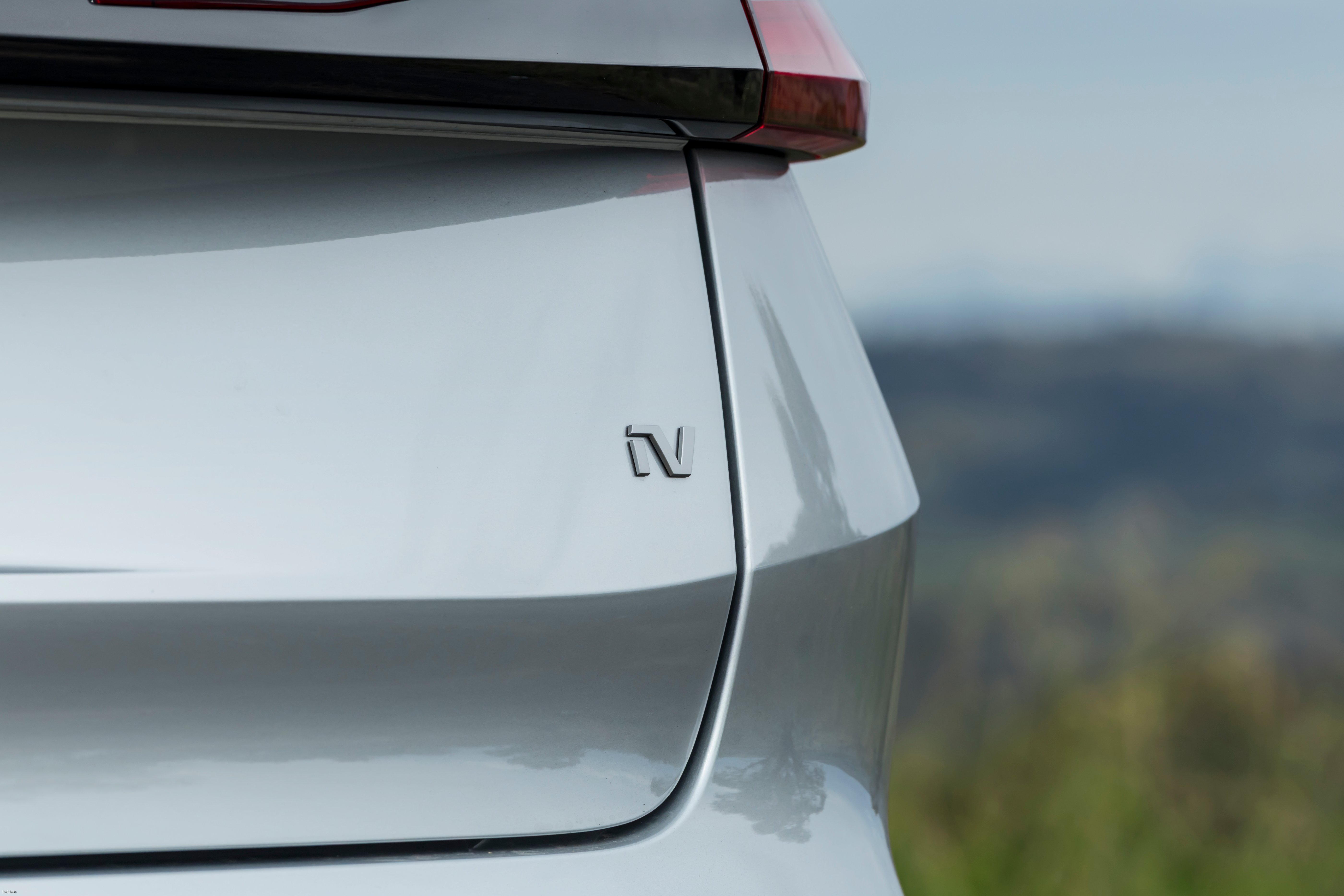
However, there’s no such thing as a free lunch, and you’ll pay $8500 for the privilege of this flexibility in the case of the Kodiaq. And compared to the plug-less Kodiaq, the PHEV also goes without a third row of seats and all-wheel drive.
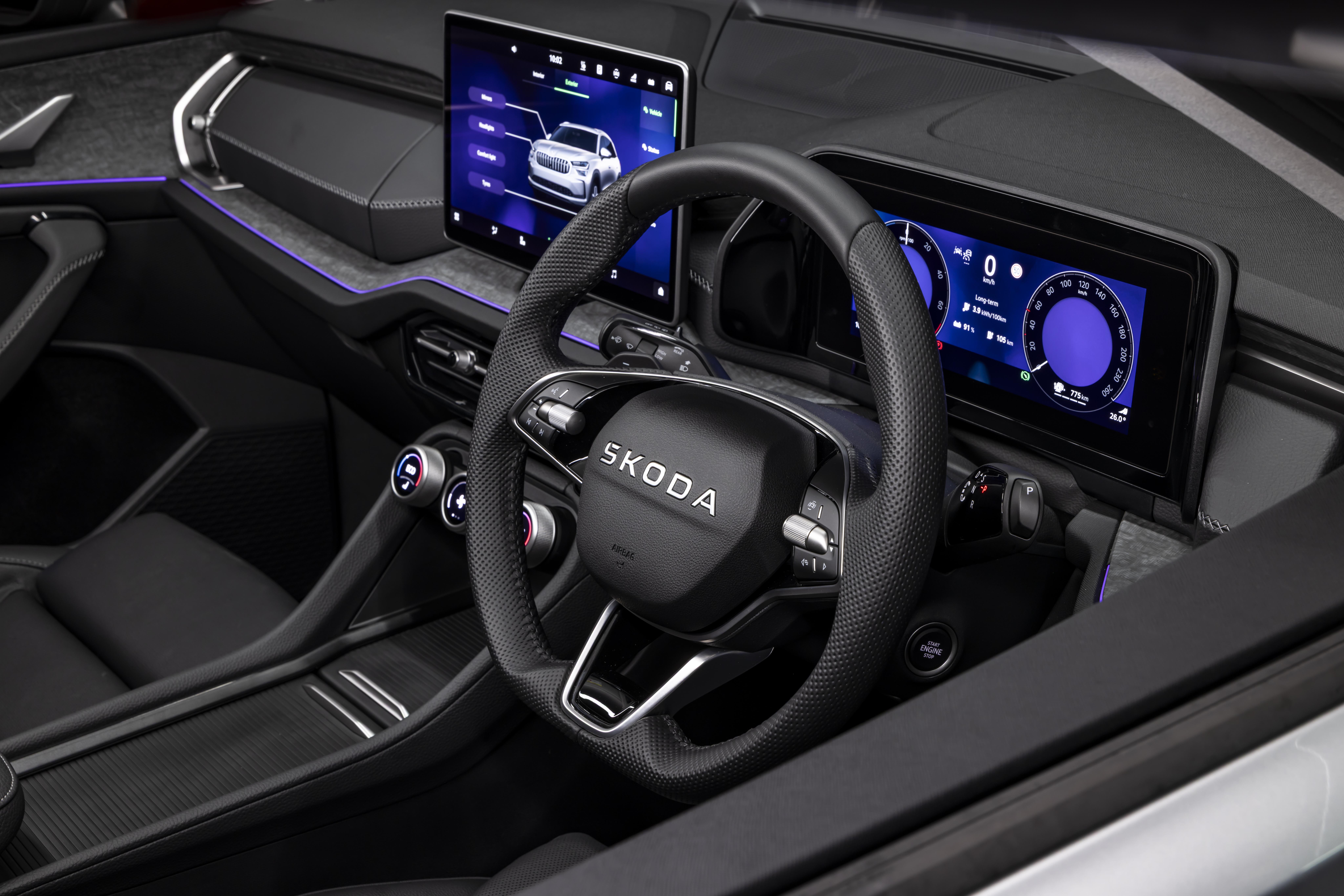
Perhaps the decision to go semi-electric isn’t so simple, then. Muddying the waters further, the Kodiaq is far from the only large SUV to offer plug-in hybrid power. In fact, Skoda’s latest arrival is priced to compete with more PHEVs than can be counted on two hands.
With that in mind, how does the Kodiaq PHEV stack up against the competition? And is 2026 the year of the PHEV? Let’s break it down.
How much does the Skoda Kodiaq cost?
As was foretold by Skoda in October 2025, the Select PHEV slots in between the petrol Sportline and RS variants in the Kodiaq range.
| Model | Price before on-roads |
|---|---|
| 2026 Skoda Kodiaq Select 4×4 | $54,990 |
| 2026 Skoda Kodiaq Sportline 4×4 | $58,990 |
| 2026 Skoda Kodiaq Select PHEV | $63,490 |
| 2026 Skoda Kodiaq RS 4×4 | $68,990 |
As such, it’s priced similarly to the Mitsubishi Outlander PHEV (from $58,990 before on-roads), BYD Sealion 8 Dynamic AWD ($63,990 plus ORCs), and Chery Tiggo 9 ($59,990 plus ORCs). Other competitors include the Omoda 9 and MG QS, and PHEV versions of the Mazda CX-80, Kia Sorento, Jaecoo J7 and Chery Tiggo 8.
In other words, there’s no shortage of alternatives to the Kodiaq PHEV, and plenty are cheaper than the Skoda. Well, at least those from China.
To see how the Skoda Kodiaq lines up against the competition, check out our comparison tool
What is the Skoda Kodiaq like on the inside?
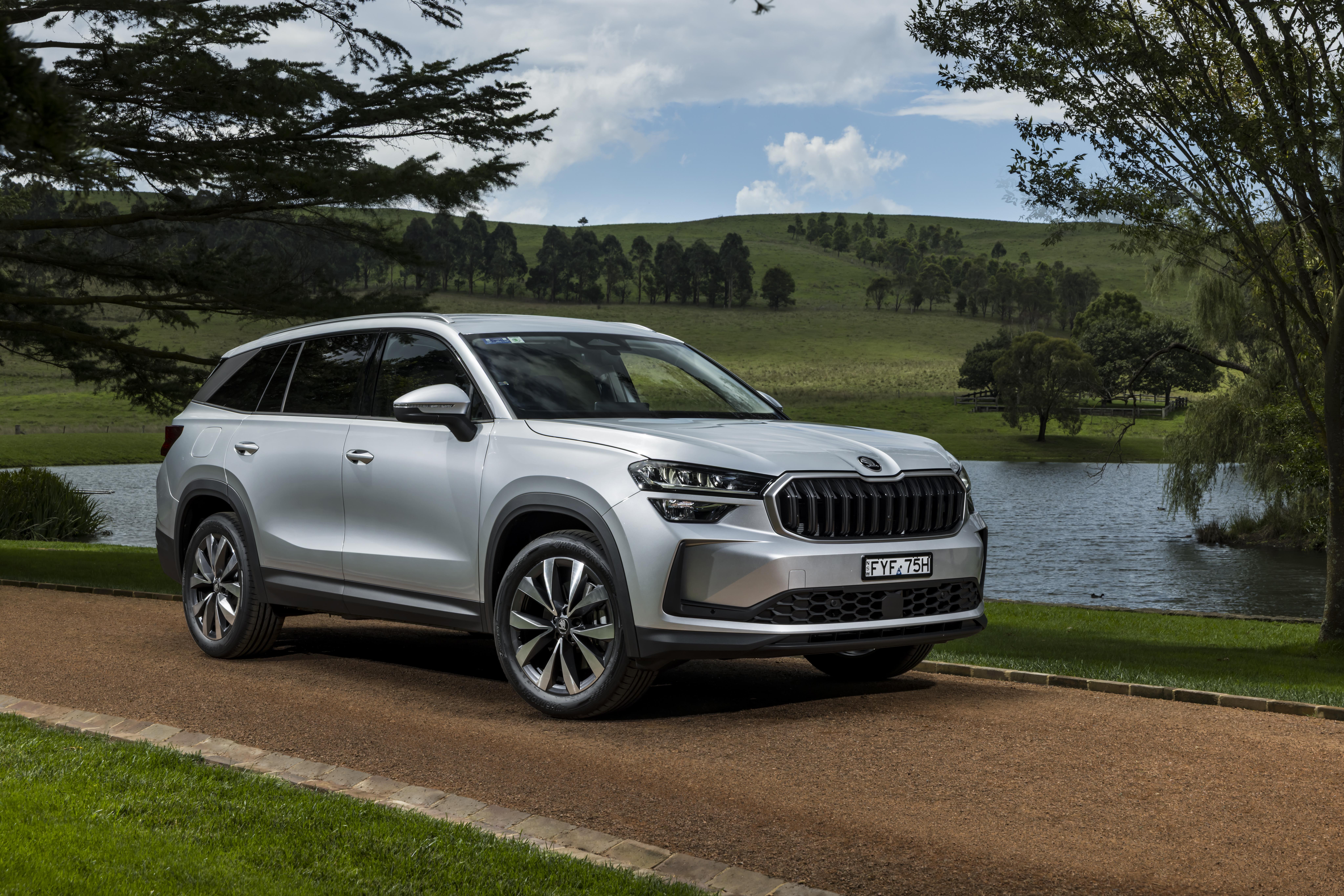
Like the entry-level petrol variant it's based on, the Select PHEV feels quite premium for a base model, even if Chinese rivals offer more standard equipment for the money.
The standard leather upholstery is of a high quality, while the relatively few buttons, dials and toggles feel substantial. Similarly, the steering wheel is leather-wrapped, with perforated grips, pronounced thumb rests, and a generally nice feel in the hands.
Beyond passing the touch test, the front seats impress with three-stage heating and extended thigh support, plus power adjustment, memory and lumbar for the driver. As a result, you won’t struggle to get comfy, although seat ventilation would make for a nice upgrade given Australia’s hot climate.
Black is the default interior colour, but customers can instead opt for cognac upholstery at no extra cost, which further elevates perceptions of quality. Soft-touch plastics complement the leather, diminishing your chances of bumping into something nasty.
It’s a shame the same can’t be said of the patterned plastic dash inlays, which look a little cheap and were already showing signs of wear in our test car. The overall ambience is pleasant, though.
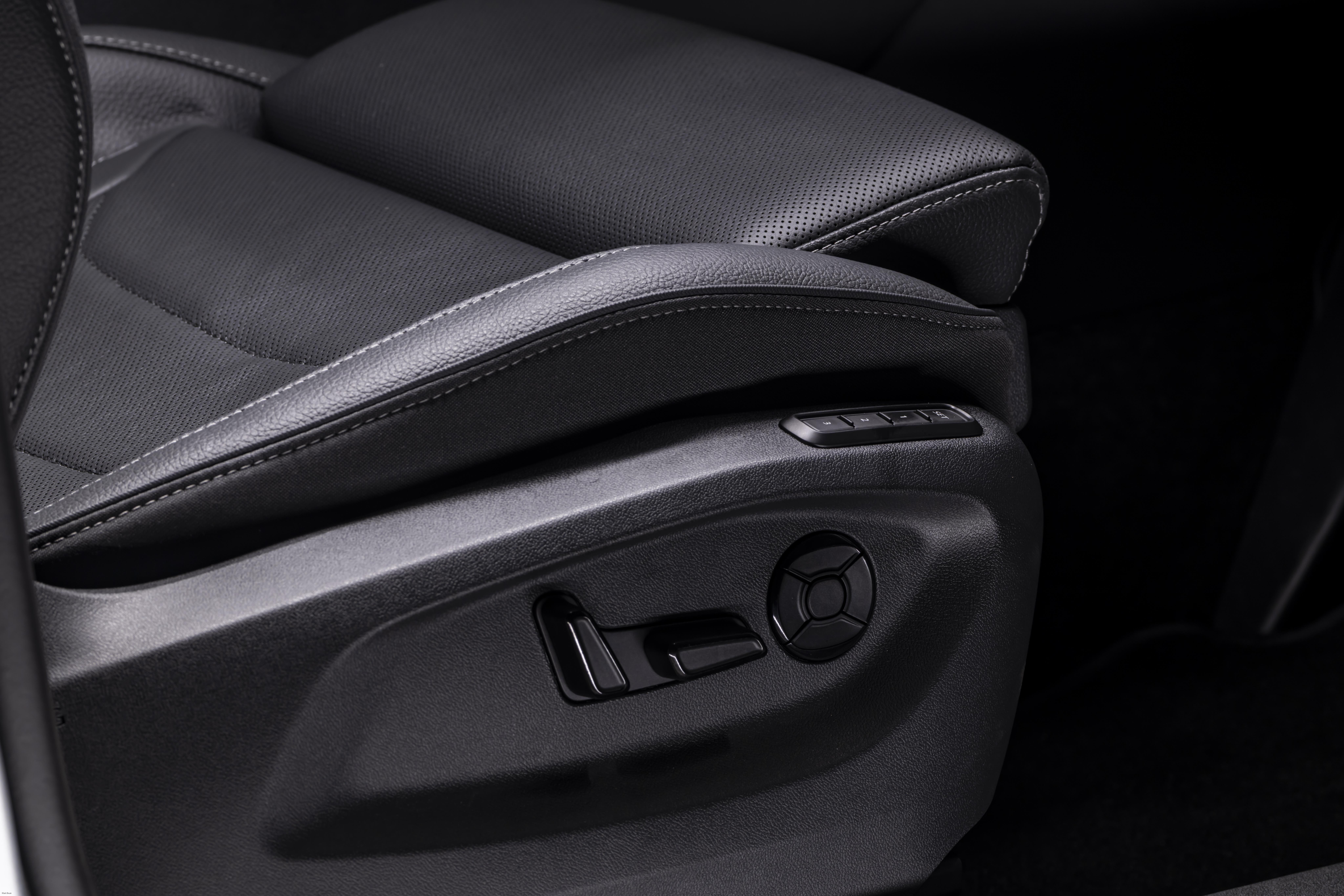
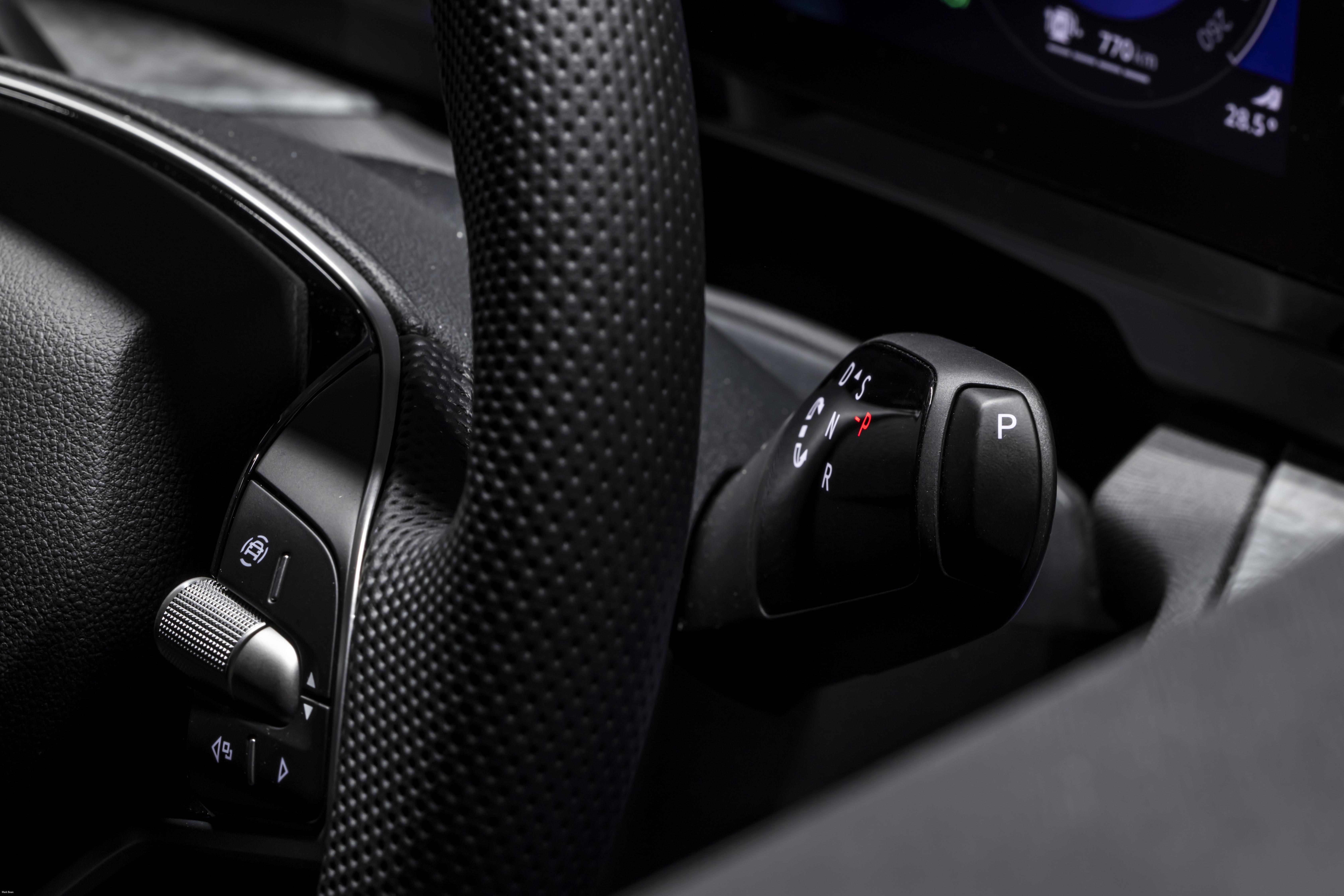
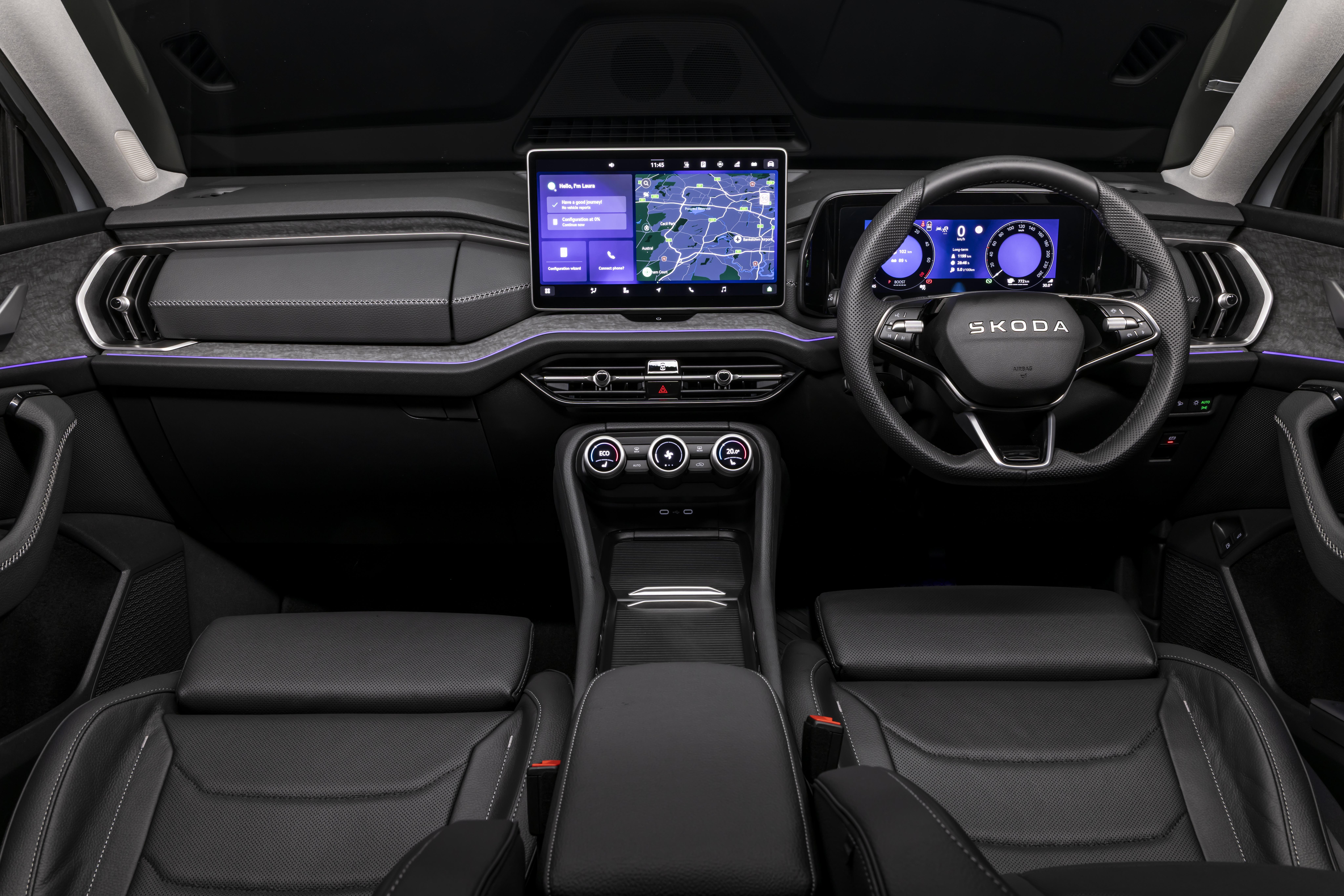
As is the layout of the cabin, which prioritises functionality over design to its benefit. Audio and display adjustments can be made via clearly labelled buttons on the steering wheel, while the centre stack is home to a trio of digital dials – modern, yet simple. There’s more to these dials than meets the eye, though, as they’ve been treated to some of Skoda’s ‘simply clever’ magic.
The ‘Smart Dials’, as they’re known, represent a user-friendly evolution of the current trend of cabin decluttering. All three are multi-purpose – the outboard pair control climate and seat heating, while the centre dial can be configured to adjust drive modes, fan speed and direction, audio volume, and map zoom. Set them up as you please and twist away, rather than spending an age fiddling with several buttons and switches or a crowded infotainment screen.
It’s a genius example of technology that treats form and function as equals. A similar level of thought has gone into the storage available up front, of which there’s plenty. In addition to the usual selection of trays and cubbies, the Kodiaq houses an extra lidded compartment above the glovebox, as well as removable trash boxes in the door bins. The standard centre console bin is deeper than most, while two phones can sit side by side under the centre stack.
One of the aforementioned phone pads doubles as a wireless charger, and two nearby USB-C outlets also serve to keep devices powered up. A wired connection isn’t required for smartphone mirroring, so you’ll never rue forgetting a cable.
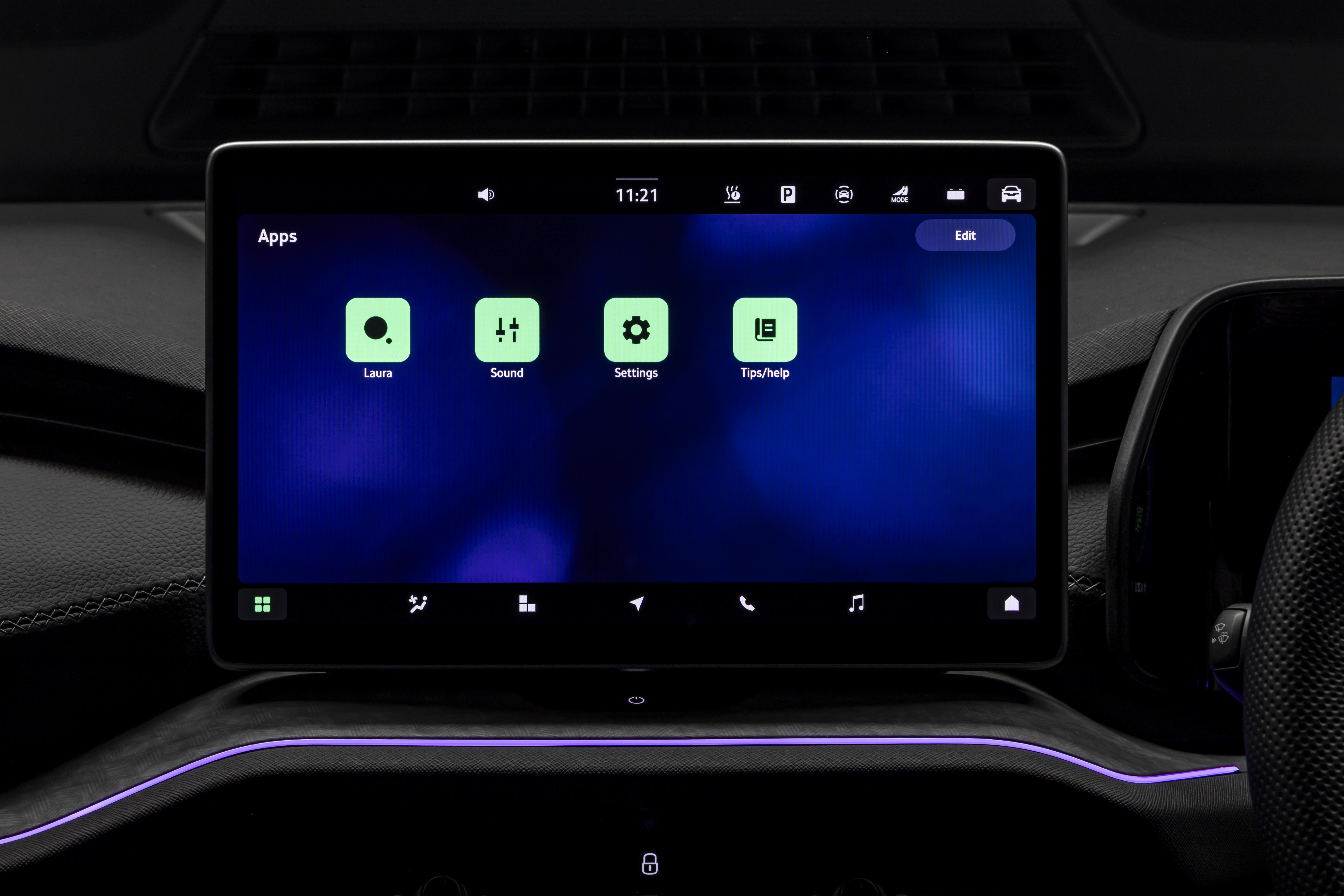
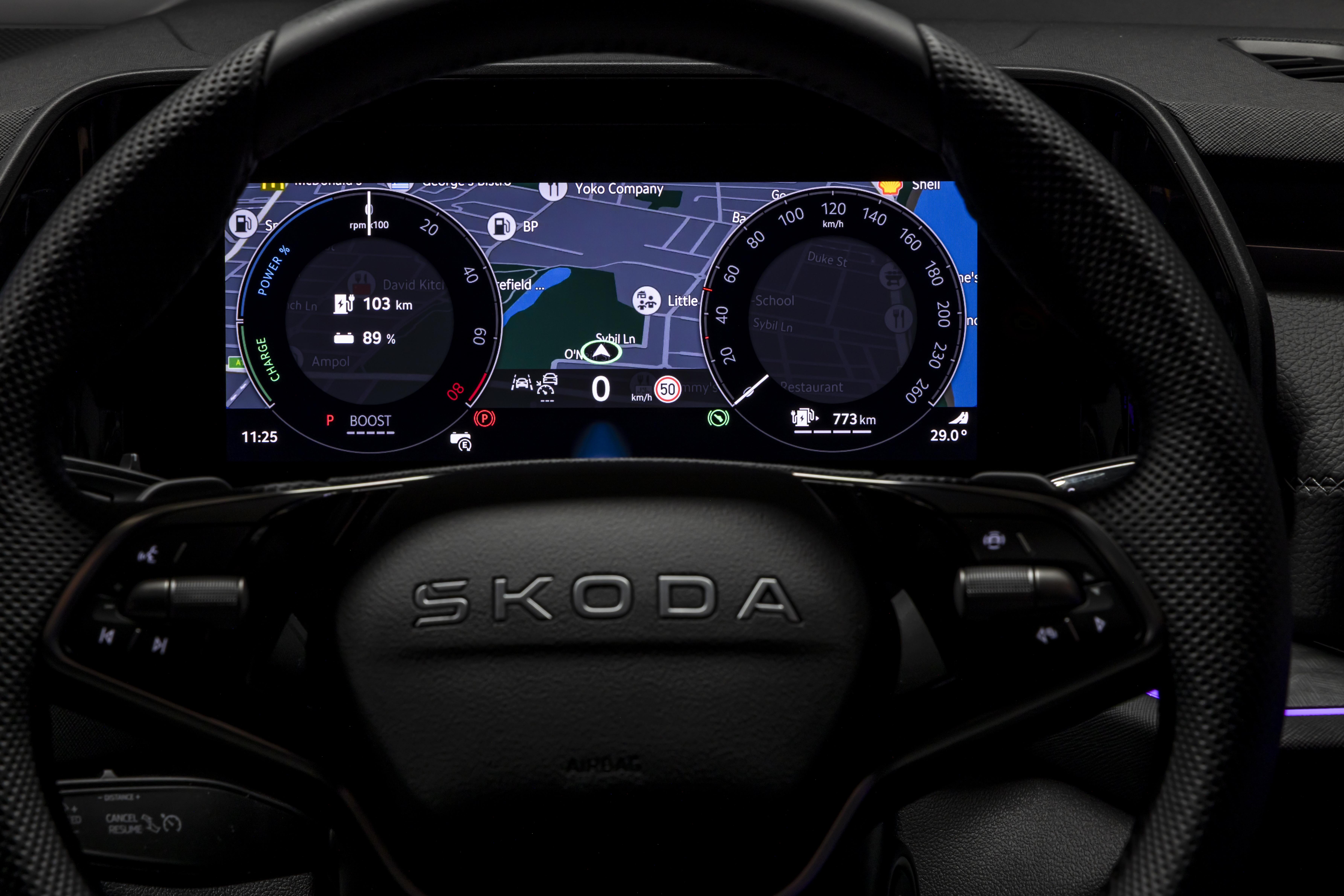
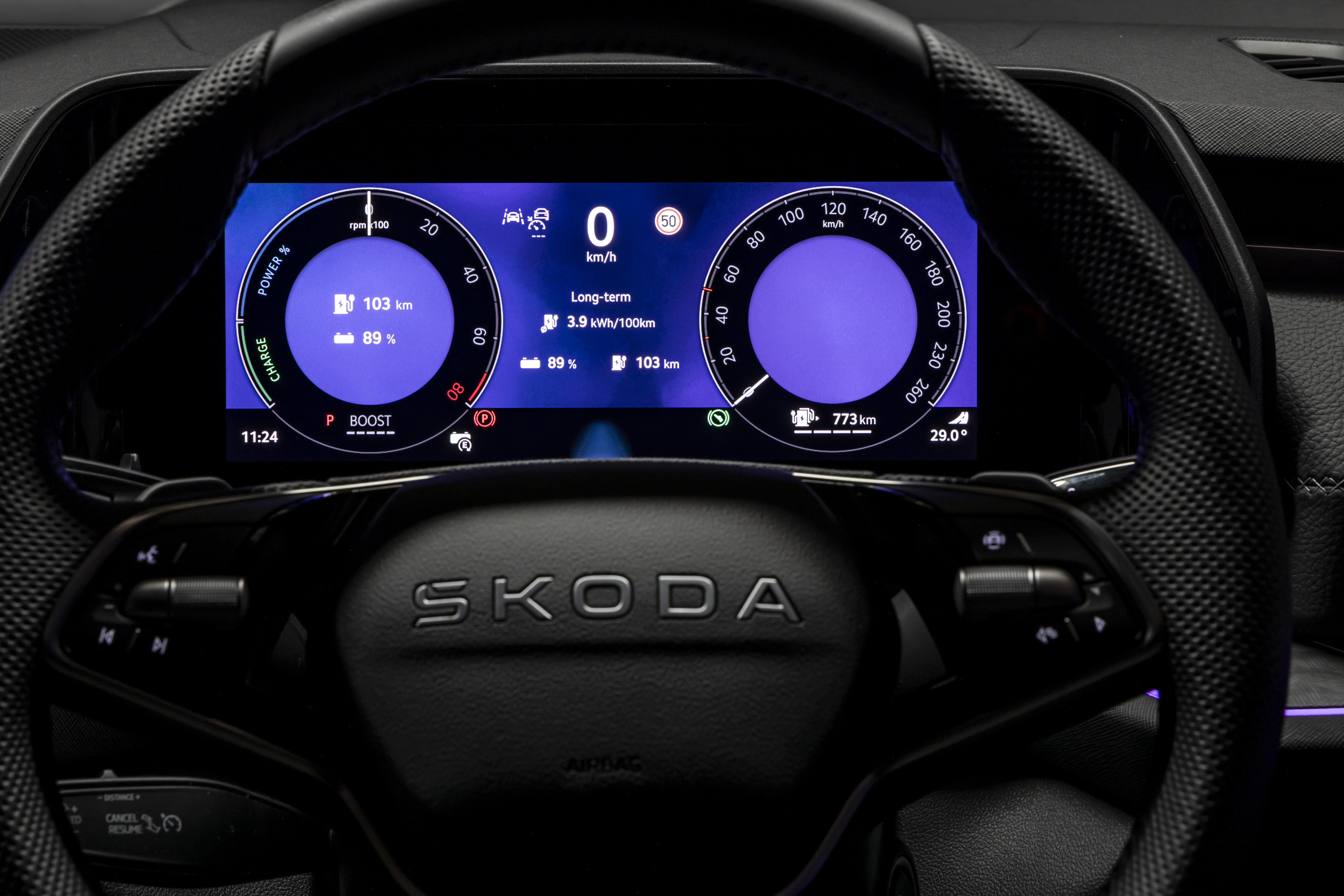
And the Select hardly feels bare bones in the technology department, boasting the same 13-inch infotainment touchscreen and 10-inch digital instrument cluster found in other Kodiaqs. The former presents with a familiar app grid – just like any modern smartphone – as well as configurable shortcut bars pinned to the top and bottom of the display.
Does that sound like icon overload? Don’t worry, the screen is large enough to fit everything neatly and high-resolution graphics make it easy to distinguish between apps. Touch inputs draw an instant response from the system, too.
An abundance of icons also suggests excellent functionality, although there’s one huge omission. Despite a plethora of rival brands supporting connected services in their cars, Skoda Australia still doesn’t offer the technology, preventing owners from accessing convenience features including remote start and stop, vehicle system monitoring and tracking, remote climate control, and over-the-air software updates. For some, this will be a dealbreaker. Others will simply shrug their shoulders.
Behind the steering wheel sits an expansive digital instrument cluster with outboard gauges and a customisable centre readout – a simple design that will stand the test of time. There's no head-up display though, which is reserved for the Sportline and RS.
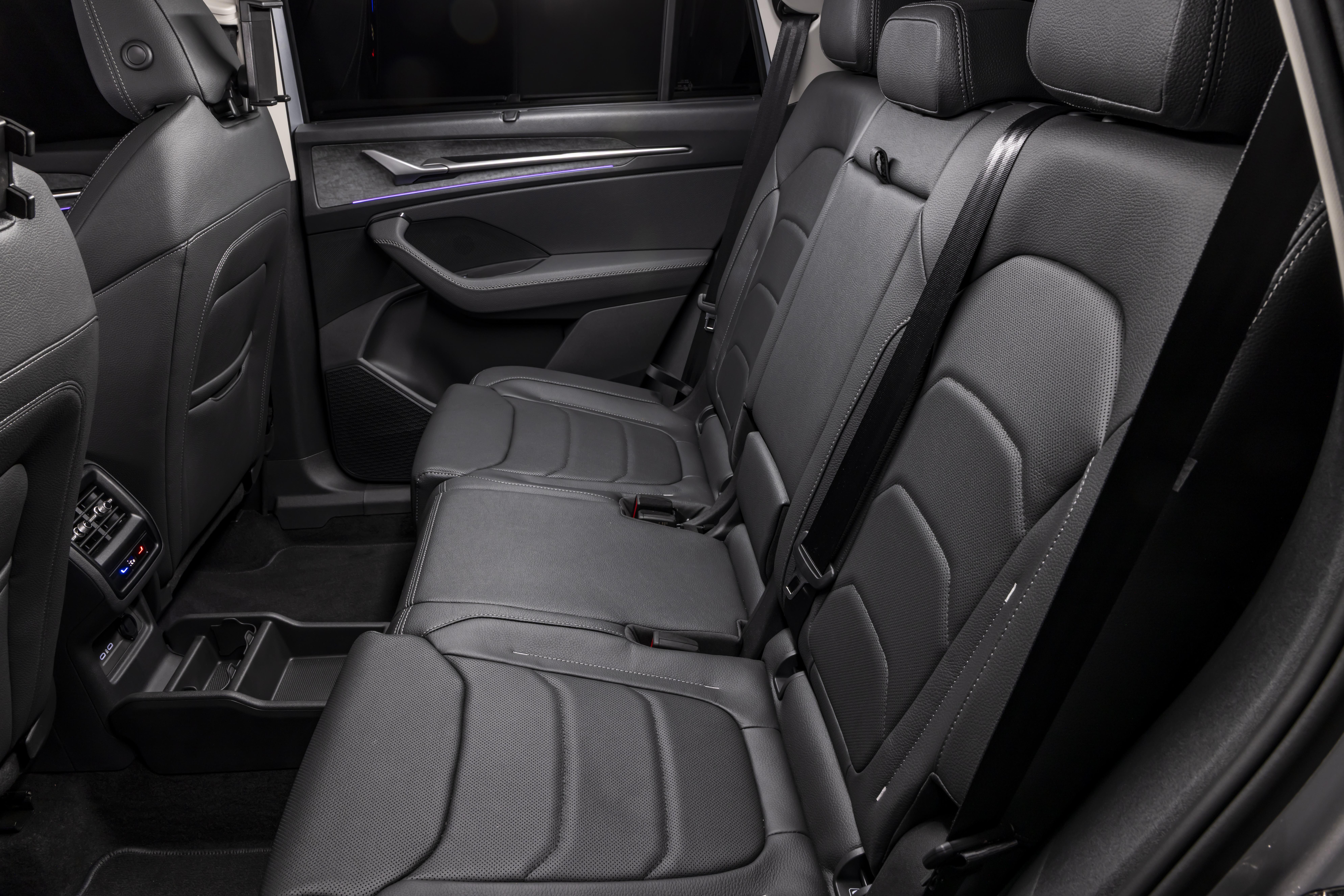
The Select PHEV also deprives buyers of a third row of seats, leaving just five spots for people to occupy. Packaging issues have been blamed for the reduction in seating – an outcome that’ll cost Skoda some business.
Nevertheless, the second row is as practical as they come. The standout feature is space – there’s a huge amount of legroom, especially with the split sliding bench in its rearmost position. Headroom is also excellent, with full-size adults able to sit upright.
They’ll be relatively comfortable too. The rear bench offers decent cushioning, albeit not much lateral support, and the leather can feel a little slippery.
Still, you can realistically fit three such adults in the back if you remove the optional floor-mounted cargo box between the rear seats.
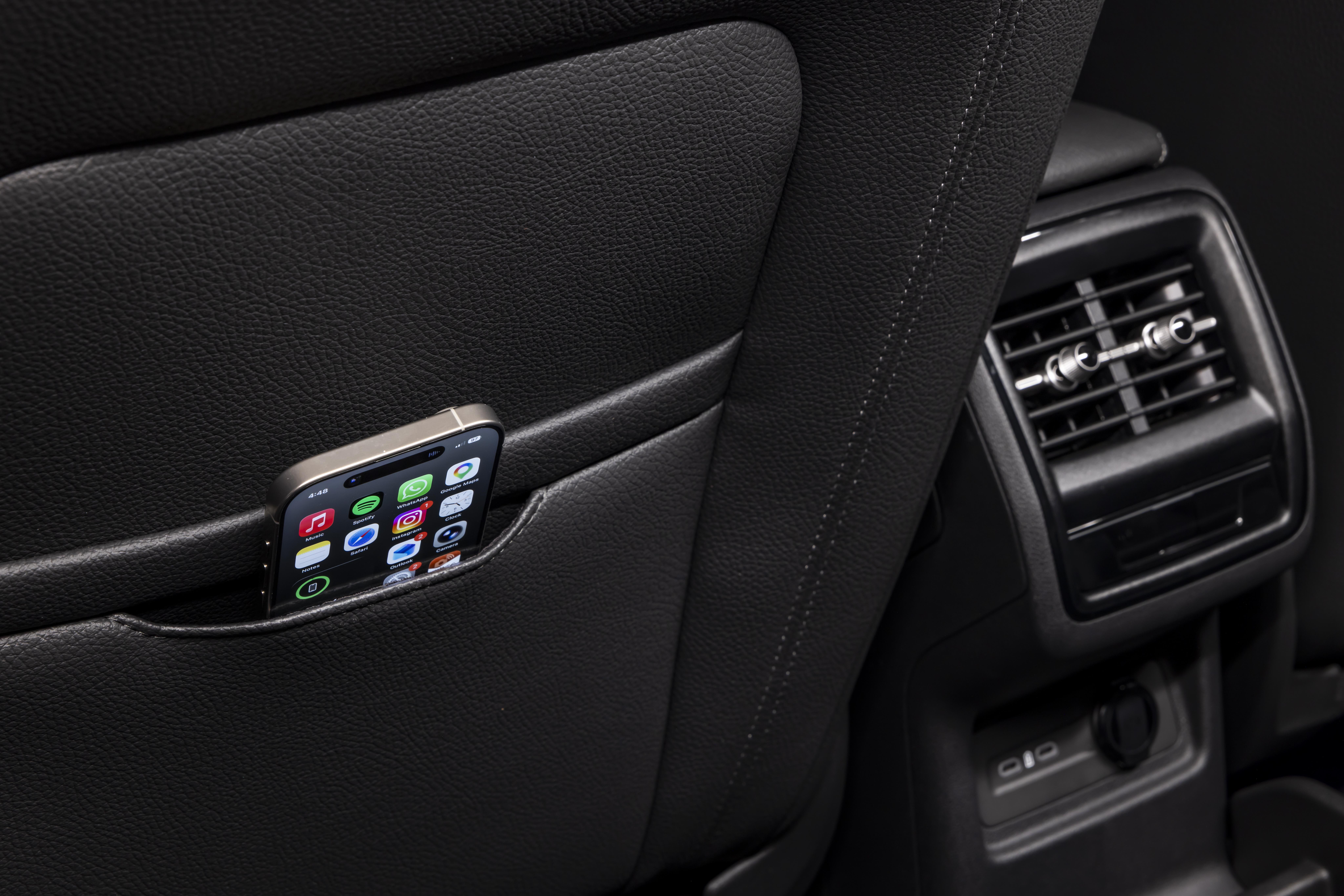
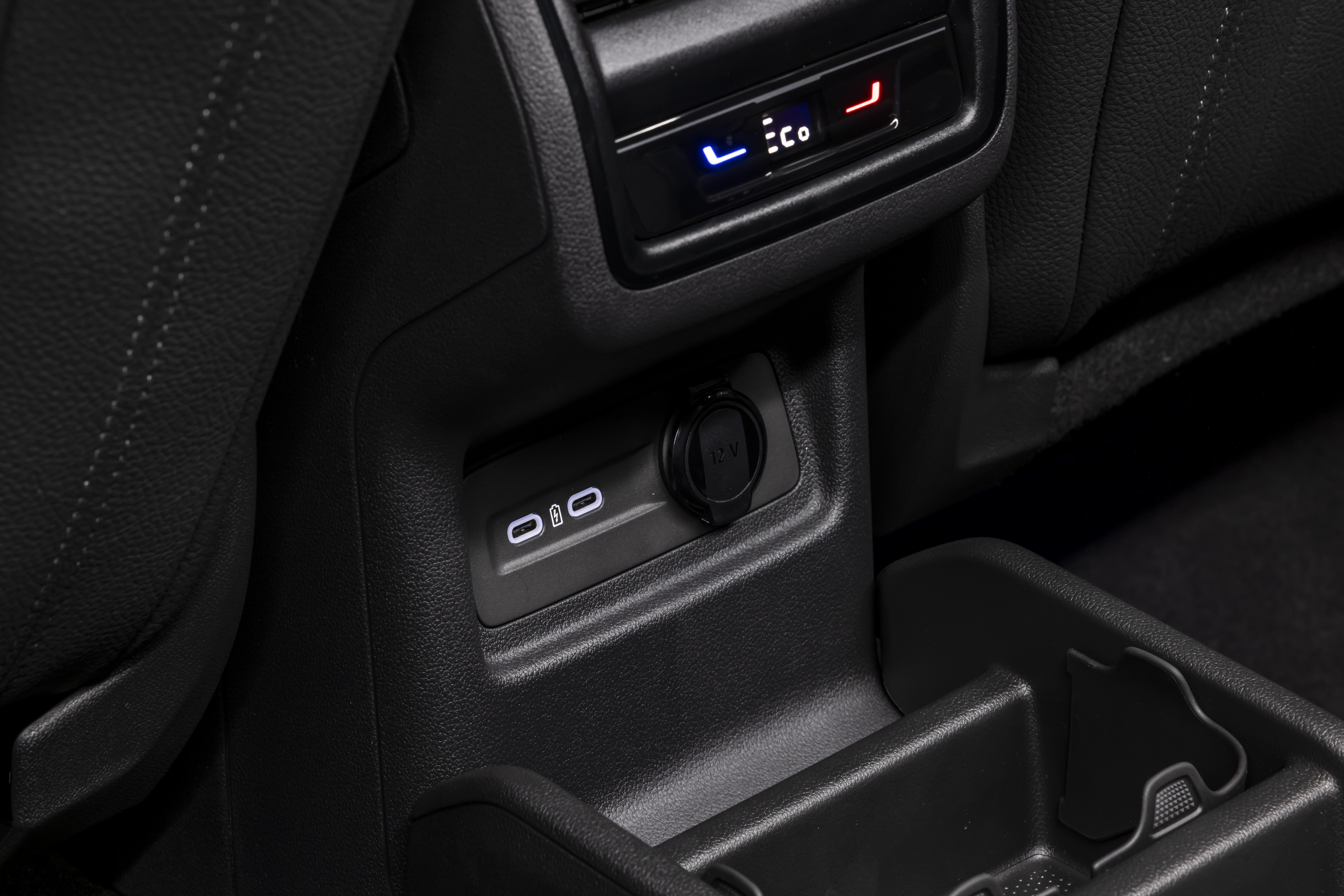
With that said, the cargo box is worth keeping, as it adds useful storage for smaller items like snacks and jewellery. Other bits and bobs can be stored in the roomy door bins or layered map pockets.
Rear entertainment screens are a rare feature these days, but the Kodiaq has the next best thing – rotating phone mounts built into the back of the front seats – perfect for streaming content on the go.
A couple of USB-C outlets, a 12V socket, air vents, window sunshades, and a centre armrest with integrated cupholders round out the list of rear creature comforts.
Boot space is another relative strength of the Kodiaq, although the five-seat Select PHEV actually has less cargo capacity than its seven-seat counterpart (with the third row folded). This is due to the positioning of the high-voltage battery.
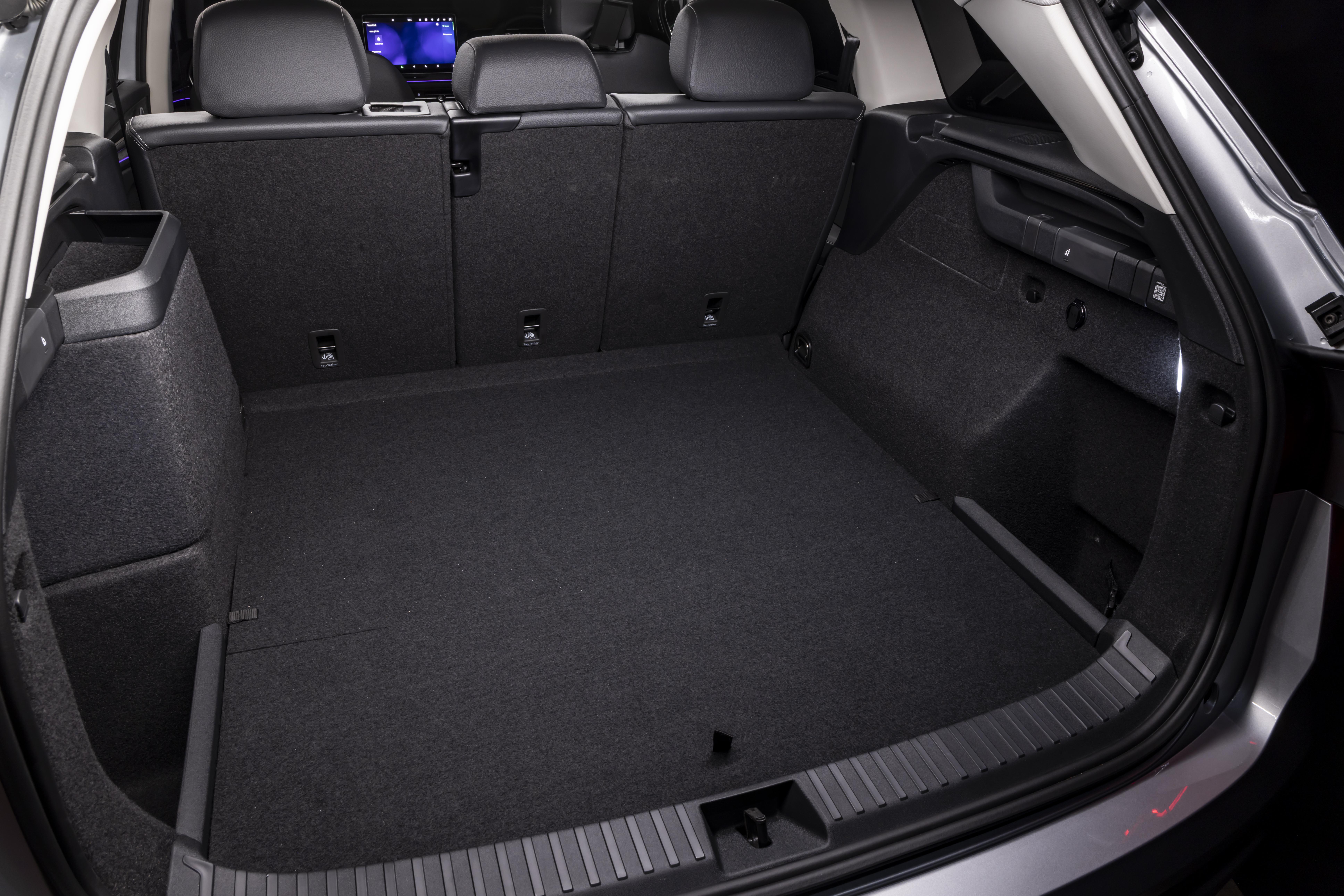
Regardless, the cargo area is wide, tall, flat and easily accessed courtesy of a standard power tailgate. There are recessed cubbies on either side of the boot to help secure smaller items, along with tie-down points, bright LED lights and a 12V power socket.
Under the floor, there’s space for your charging cables and tyre repair kit – not a space-saver spare, as is found in other Kodiaq variants.
| Dimensions | Skoda Kodiaq Select PHEV |
|---|---|
| Length | 4758mm |
| Width | 1864mm (2133mm incl. mirrors) |
| Height | 1657mm |
| Wheelbase | 2791mm |
| Boot space | 745L (rear seats up) 1945L (rear seats folded) |
To see how the Skoda Kodiaq lines up against the competition, check out our comparison tool
What’s under the bonnet?
Powering the Kodiaq Select PHEV is a 1.5-litre four-cylinder petrol engine mated with an 85kW/330Nm electric motor, for total peak outputs of 150kW of power and 350Nm of torque.
| Specifications | Skoda Kodiaq Select PHEV |
|---|---|
| Engine | 1.5L 4cyl turbo-petrol |
| Engine outputs | 110kW 250Nm |
| Electric motor outputs | 85kW 330Nm |
| System outputs | 150kW 350Nm |
| Battery | 25.7kWh lithium-ion |
| Transmission | 6-speed dual-clutch auto |
| Drive type | Front-wheel drive |
| Weight | 1985kg (tare) |
| 0-100km/h (claimed) | 8.4 seconds |
| Fuel economy (claimed) | 1.9L/100km |
| Fuel economy (as tested) | 1.9L/100km |
| Electric driving range (PHEV) | 110km |
| Fuel tank capacity | 45L |
| Fuel requirement | 95-octane premium unleaded |
| CO2 emissions | 42g/km |
| Emissions standard | Euro 6 |
| Braked tow capacity | 1800kg |
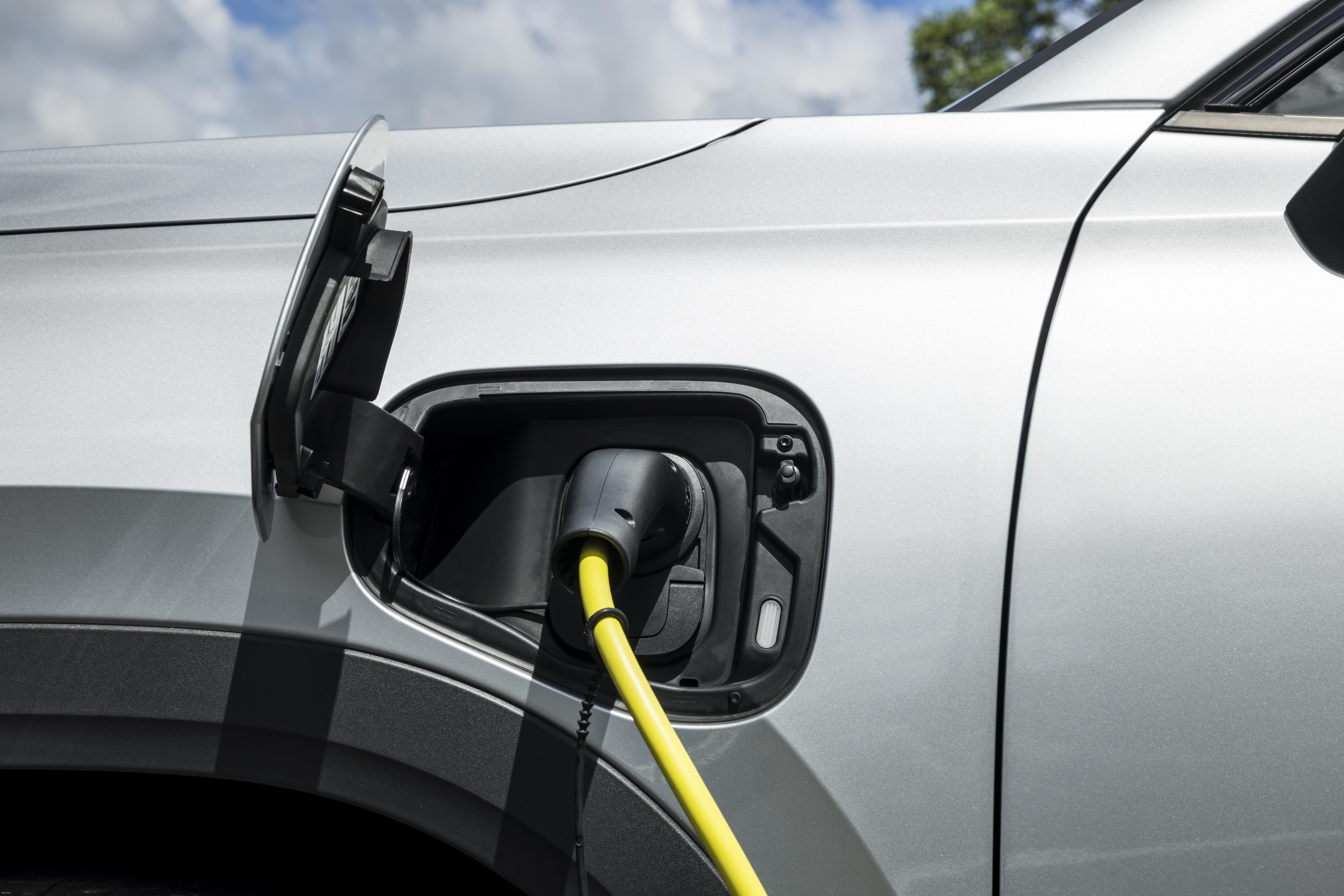
The Kodiaq Select PHEV uses a 25.7kWh lithium-ion battery capable of charging at up to 11kW on AC power and 50kW when hooked up to a DC fast-charger.
Skoda claims 110km of electric range on the WLTP cycle. For context, Mitsubishi claims an electric driving range of 84km for the updated Outlander PHEV.
To see how the Skoda Kodiaq lines up against the competition, check out our comparison tool
How does the Skoda Kodiaq drive?
Having attended the launch of the second-generation Kodiaq last year, I can safely say the introduction of a plug-in powertrain addresses one of its main pitfalls – efficiency – without resolving the other – a lack of performance.
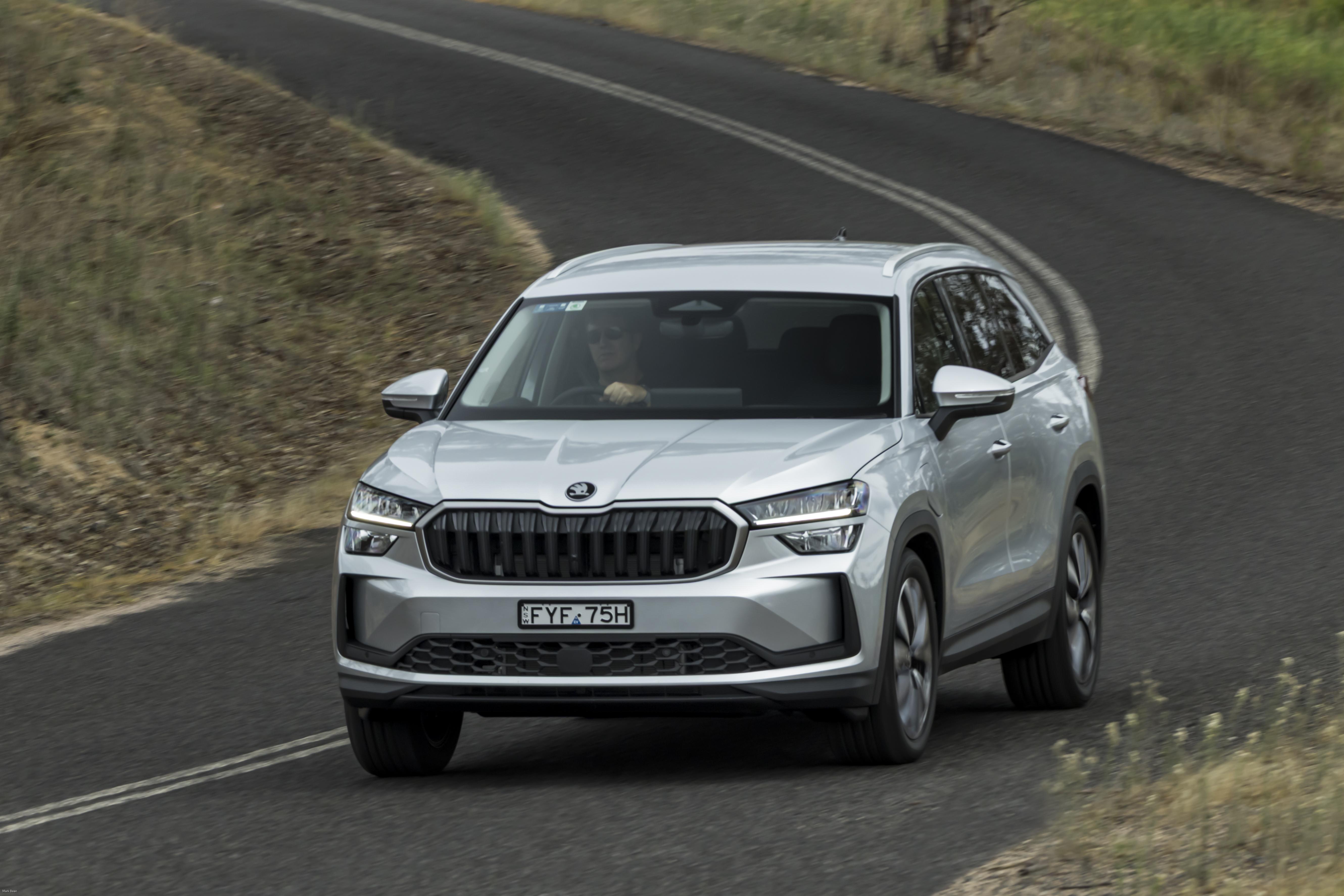
Driven sensibly and charged regularly, the Kodiaq PHEV consumes around 80 per cent less fuel than its purely combustion-powered counterpart – a significant saving, rendered even more significant by the current price of petrol. It’s also among the most efficient large SUVs you can buy, excluding electric stuff, of course.
The Kodiaq manages this by defaulting to electric power wherever possible, even when driven in its hybrid mode. The petrol engine only really wakes up when the car is under heavier loads – steep inclines, higher speeds or hard acceleration – and goes back to sleep quickly afterward.
Electricity can also be harvested and reused through regenerative braking, further reducing the need to lean on the turbo four-cylinder. The regen system is smooth and straightforward, though it doesn’t slow the car particularly quickly, nor allow for true single-pedal driving. For context, the Volvo XC60 PHEV that I drove recently was more EV-like in its energy recovery.
The aforementioned Volvo – a $100k premium offering – can’t match the cheaper Kodiaq’s impressive EV range, though. Skoda claims the Kodiaq PHEV can travel 110km on electric power alone, or 21km further than a plug-in hybrid XC60. It won’t get as far as an all-wheel drive BYD Sealion 8 or Chery Tiggo 9, however.
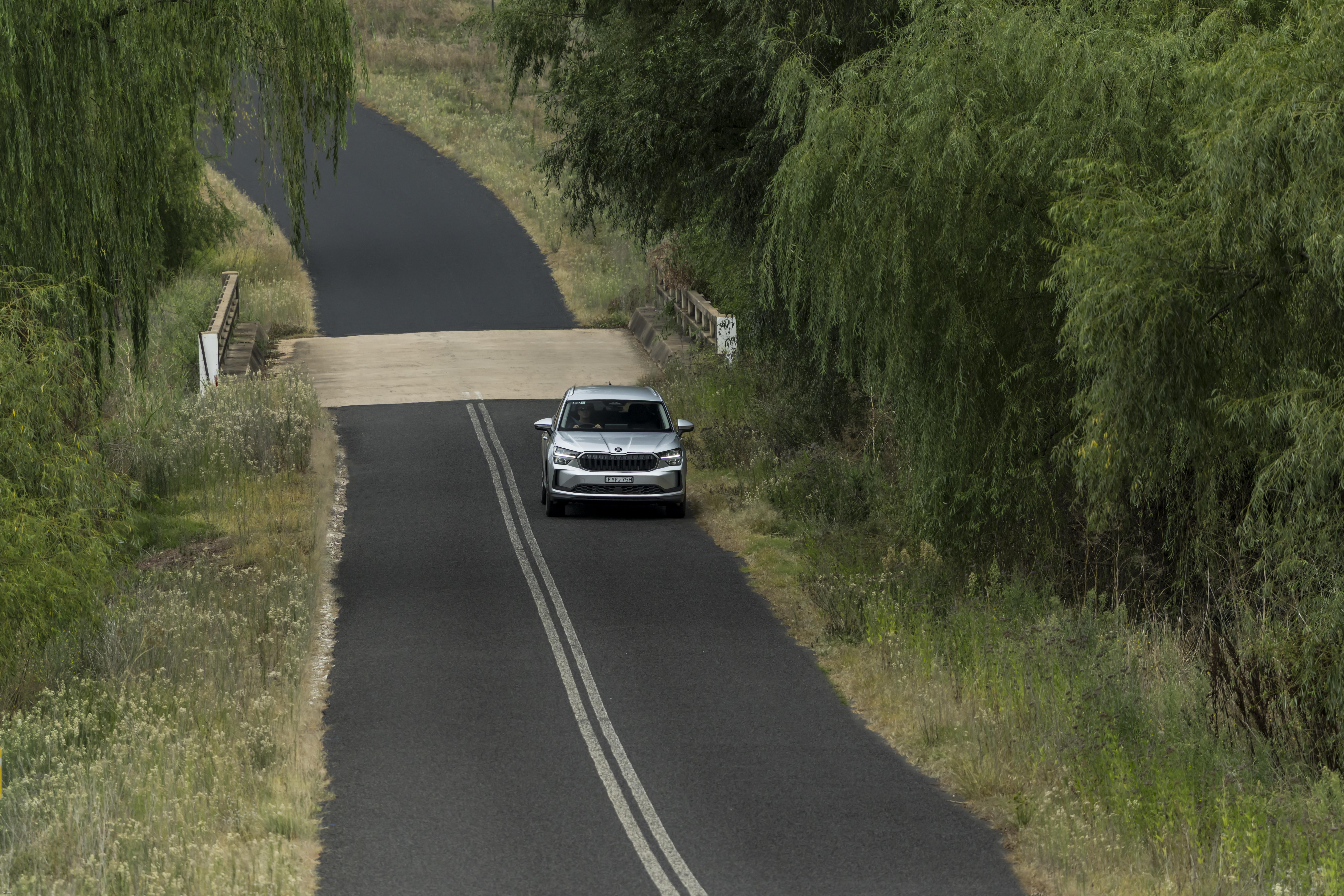
And I don’t necessarily recommend treating the Kodiaq like an EV from a driving perspective, as it lacks grunt when drawing solely from the 85kW/330Nm front motor. This was blatantly obvious during our drive program, when my test vehicle struggled to get up to highway speeds in decent time. And that’s without any passengers or luggage onboard.
What’s more, if you demand repeat bursts of acceleration, the Kodiaq PHEV not only feels sluggish but will also chew through its battery quite quickly. For those reasons, electric power works best for low-speed, urban driving rather than family road trips.
The driving experience improves markedly when you switch into hybrid mode. Now, a flex of the right foot is met with a reassuring, albeit not thrilling, surge of torque that’s more in keeping with what you expect from this kind of vehicle. Still, this isn’t a particularly quick SUV, and more than a few PHEVs would destroy it in a drag race.
That’s especially true given the front-wheel drive layout of the Kodiaq, which limits its traction in some scenarios such as wet weather. We experienced such conditions during the launch event in Berrima, New South Wales, and subsequently discovered that 350Nm going to the front wheels is a recipe for axle tramp and torque steer when taking off hard from a standstill.
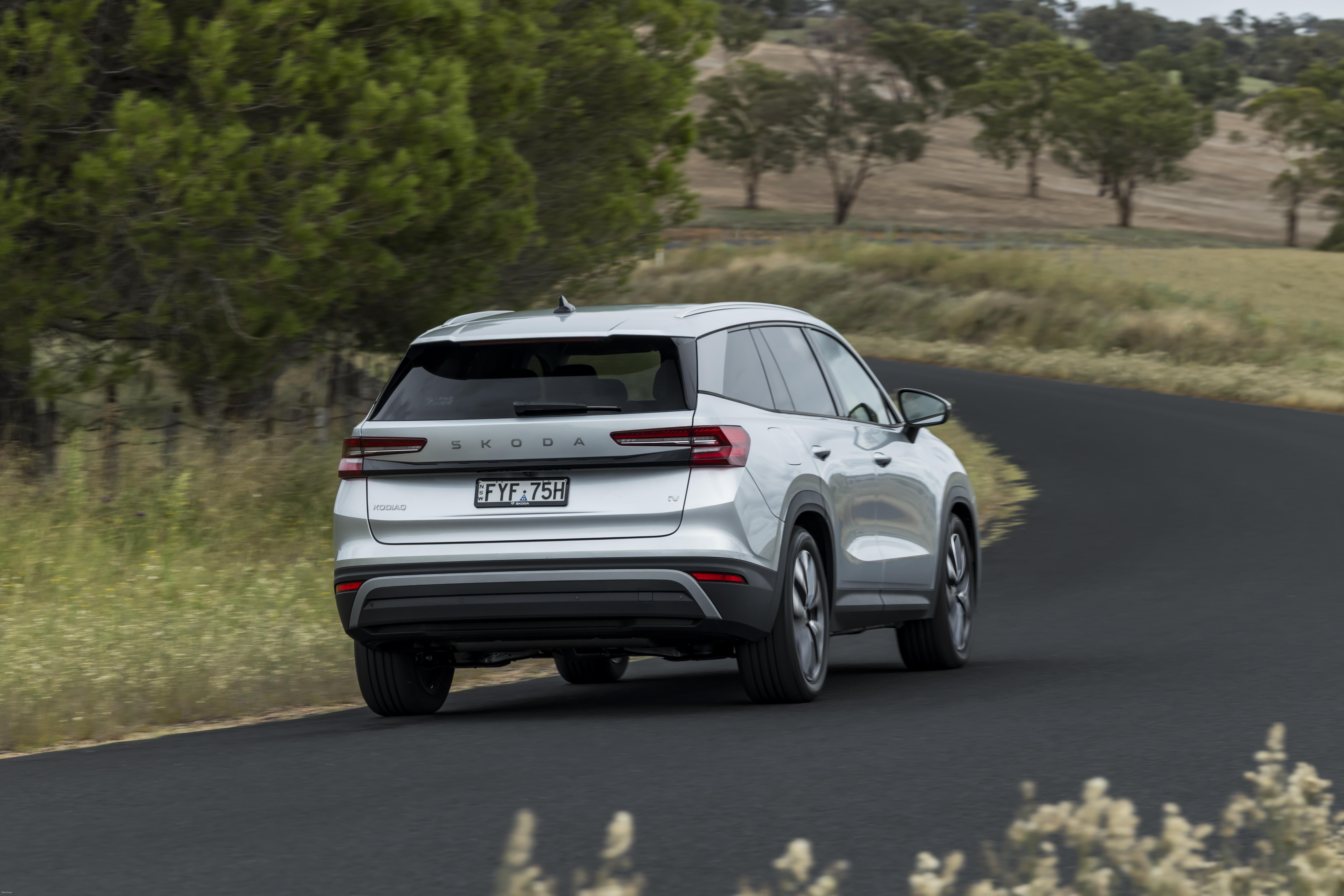
The Kodiaq’s lack of all-wheel drive is also telling through corners. You don’t buy one of these to carve up back-roads, but this PHEV doesn’t inspire confidence in the same way that the AWD petrol variants do. That’s especially true when the road is a bit greasy.
That said, the handling of this front-drive SUV can still be described as tidy, and there’s no doubting the grip provided by its Pirelli tyres. The steering is consistent and predictable, with only a low level of vibration coming through over rough surfaces. In fact, all the driver controls are well-weighted and easy to modulate.
But if performance and driving enjoyment are among your top priorities, the flagship all-wheel drive RS remains the pick of the Kodiaq range.
However, if you’re after a quiet, cushy family hauler, the PHEV is surely worth consideration. In terms of ride comfort, the added weight of the 25.7kWh battery doesn’t seem to have compromised the sweet balance of Skoda’s entry-level passive suspension. There’s still a slightly firm European edge to the damping, but the Kodiaq PHEV provides a comfortable and controlled ride.
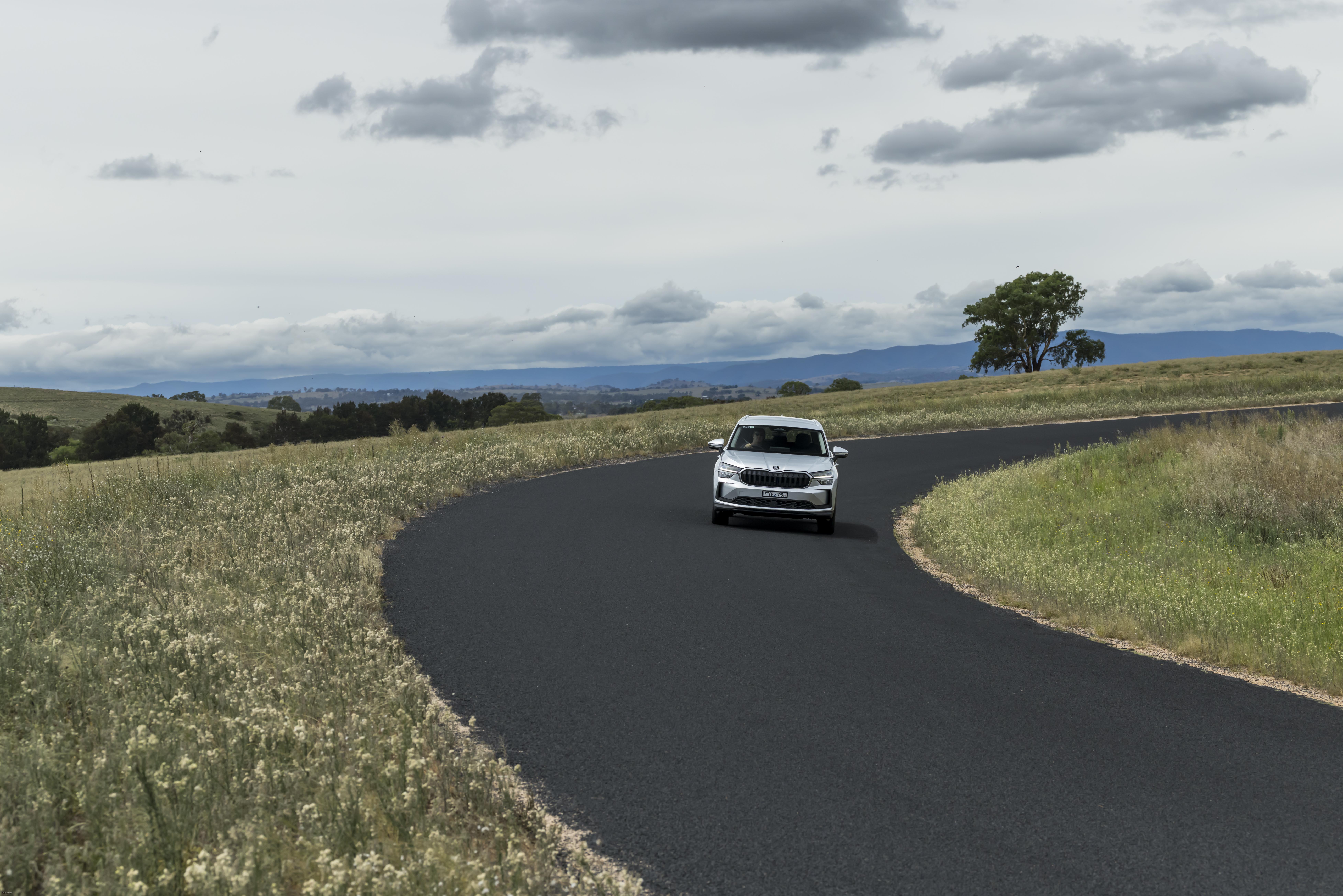
It’s a peaceful ride, too. When operating in EV mode, the Kodiaq PHEV cruises around in smooth silence. Hybrid mode necessitates transitions between petrol and electric power, but these are handled without fuss.
You won’t hear many bings or bongs from the safety systems, either. None of the modern driver aids are intrusive or overbearing, and Skoda’s Travel Assist semi-autonomous driving function works seamlessly. The worst I can say is that the lane-keep assist feature can be a little firm with its corrections, but that’s a minor blemish rather than a black mark.
To see how the Skoda Kodiaq lines up against the competition, check out our comparison tool
What do you get?
Apart from its five seats and front-wheel drive configuration, the PHEV shares most of its standard equipment with the petrol-powered Kodiaq Select.
2026 Skoda Kodiaq Select equipment highlights:
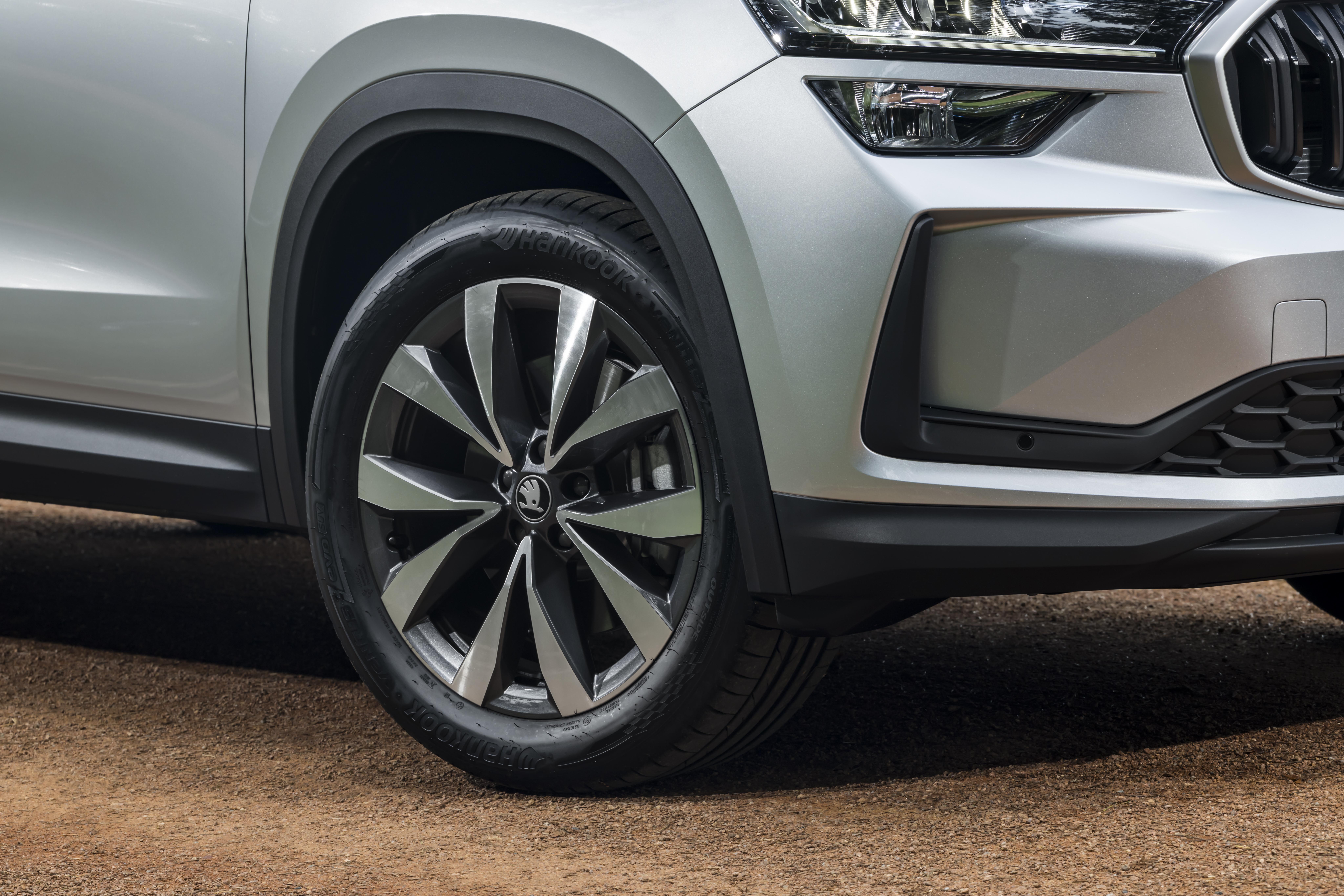
- 19-inch ‘Lefka’ alloy wheels
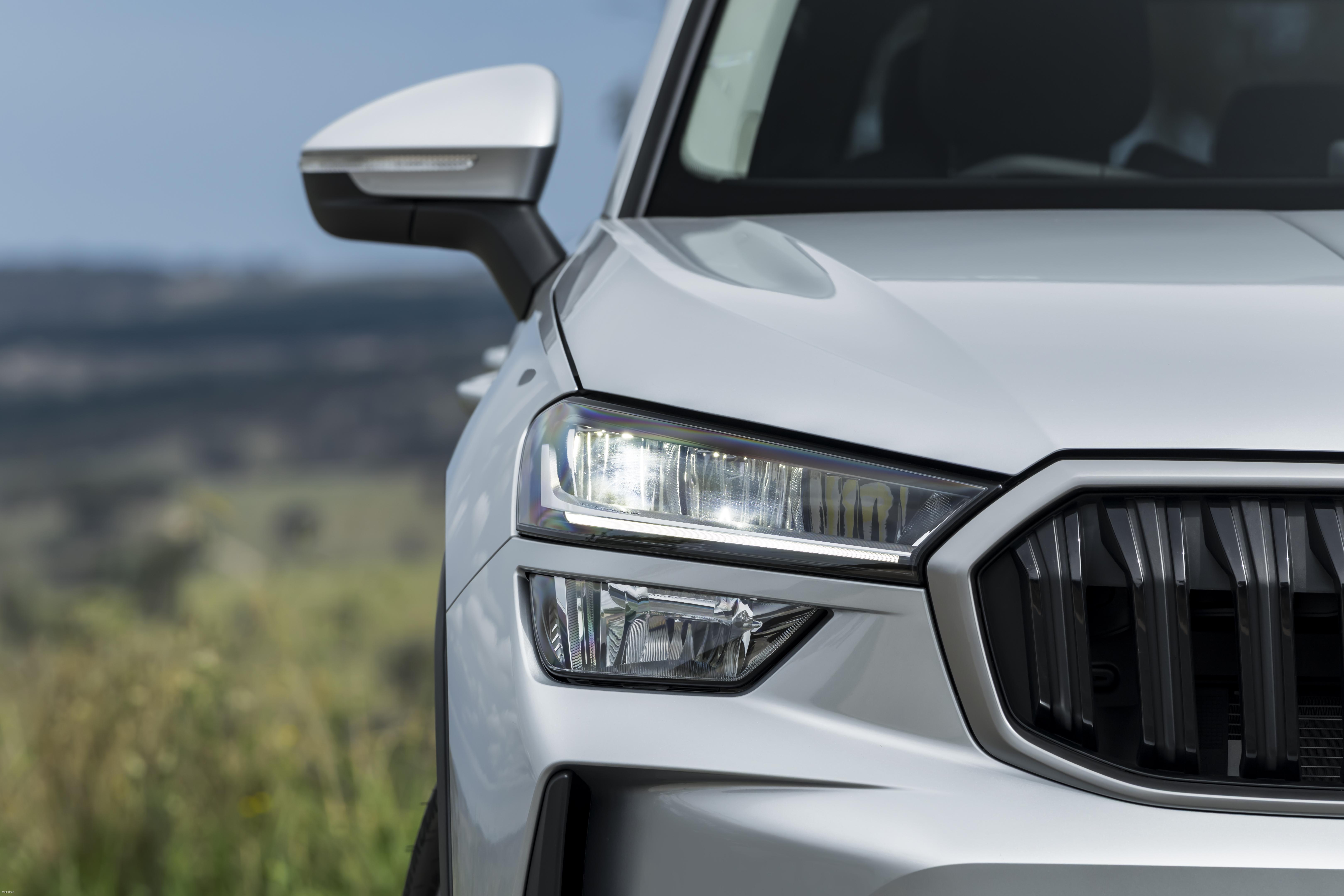
- Automatic LED headlights
- LED tail-lights
- Power-folding exterior mirrors
- Power tailgate
- Rear privacy glass
- Proximity entry with push-button start
- 10-inch Virtual Cockpit digital instrument cluster
- 13-inch touchscreen infotainment system
- Wired and wireless Apple CarPlay and Android Auto
- DAB+ digital radio
- Satellite navigation
- 9-speaker sound system
- Tri-zone climate control
- Auto-dimming rear-view mirror
- Black leather upholstery with grey stitching
- Heated front seats
- Power driver’s seat with lumbar adjustment, memory
- 2 x wireless phone chargers with cooling system
- 5 x USB-C outlets (two front, two rear, one for rear-view mirror)
- Leather-wrapped steering wheel
- Paddle shifters
- Colour-adjustable ambient lighting
Kodiaq Sportline adds:
- 20-inch ‘Rila’ alloy wheels with aero covers
- Matrix LED headlights
- LED tail-lights with dynamic indicators
- Black exterior trim
- Heated steering wheel
- Aluminium pedals
- Suedia/leatherette upholstery
- Heated front seats
- Front sports seats
- Black headliner
- ‘Premium’ sound system
- Drive mode selection
Kodiaq RS adds:
- 20-inch ‘Alias’ black alloy wheels
- Dynamic Chassis Control Plus adaptive suspension
- Progressive steering
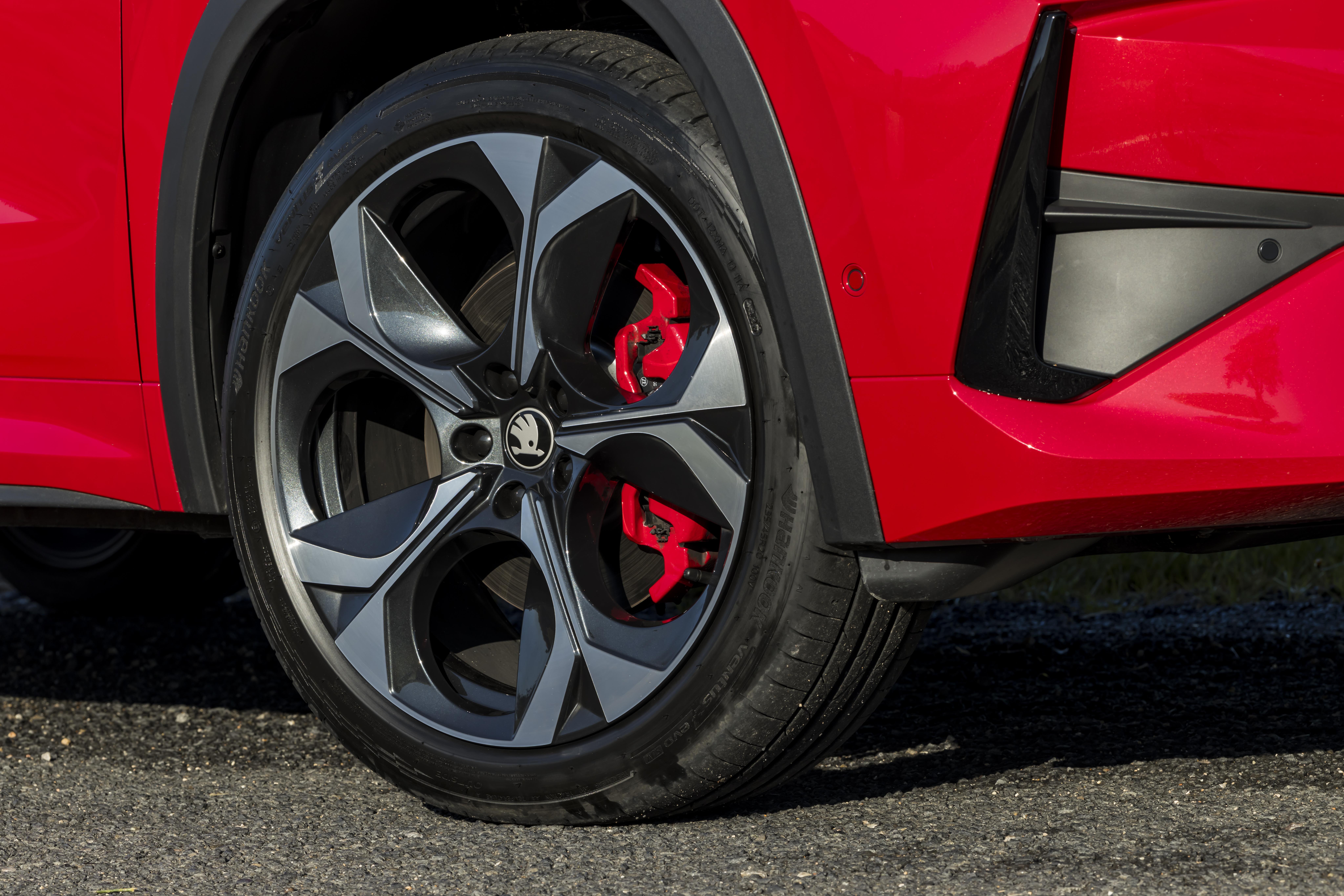
- Red brake calipers
- Dual polished stainless steel exhaust outlets
- Unique front and rear bumpers
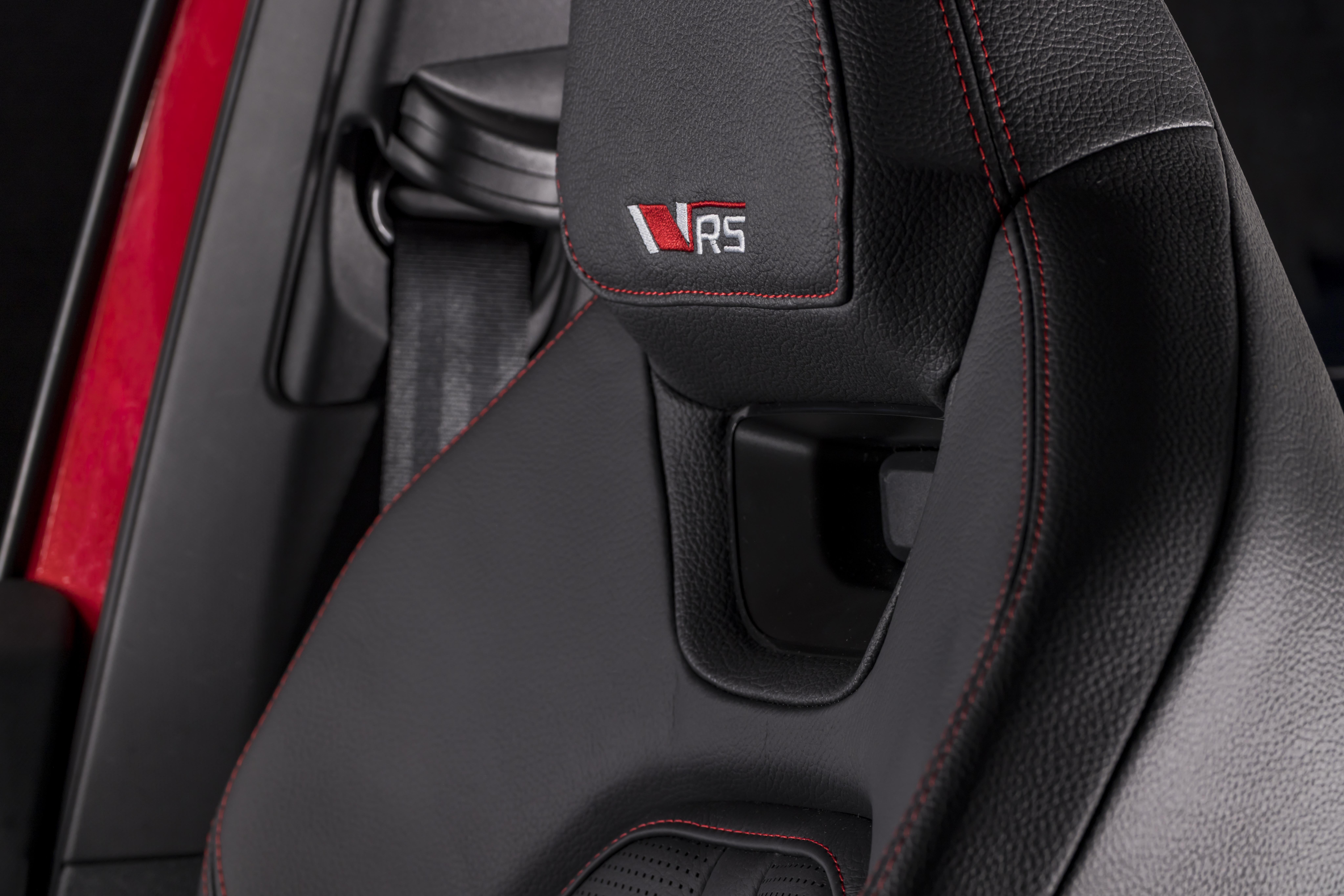
- ‘RS Sport’ black perforated leather upholstery
- Red interior stitching
- Ventilated front seats
- Heated rear seats
- Head-up display
- 13-speaker Canton sound system
To see how the Skoda Kodiaq lines up against the competition, check out our comparison tool
Options
A panoramic sunroof is a $2000 option on the Select and Sportline, up from $1500 last year. The Select can also be specified with 20-inch ‘Rila’ alloy wheels ($700) and a Cognac interior (no extra cost).
Additionally, Kodiaq Select vehicles will now be available with Skoda’s optional Signature Package.
Signature Package (Select; $6500) adds:
- Power-adjustable front seats with adjustable lumbar and memory
- Premium massage front seats
- Surround-view camera
- Intelligent Park Assist
- Matrix LED headlights
- Dynamic rear indicators
- Front grille with horizontal LED light
- Hands-free power tailgate
- 13-speaker Canton sound system
- Head-up display
To see how the Skoda Kodiaq lines up against the competition, check out our comparison tool
Is the Skoda Kodiaq safe?
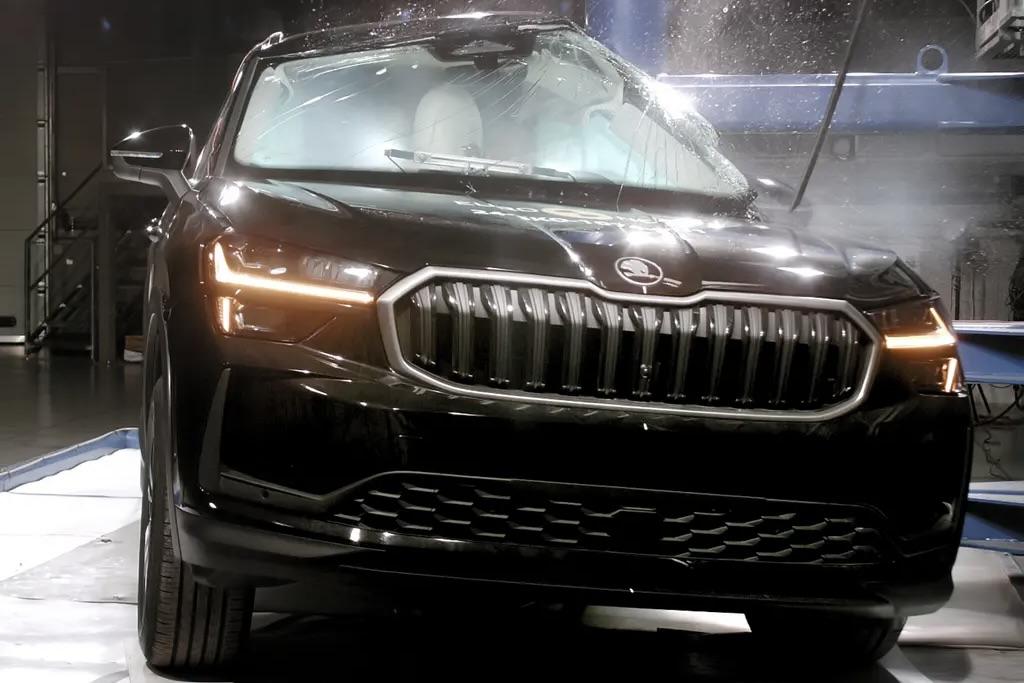
The Skoda Kodiaq wears a five-star ANCAP safety rating, based on testing conducted by Euro NCAP in 2024.
| Category | Skoda Kodiaq |
|---|---|
| Adult occupant protection | 89 per cent |
| Child occupant protection | 87 per cent |
| Vulnerable road user protection | 82 per cent |
| Safety assist | 81 per cent |
Standard safety equipment highlights:
- 9 airbags, incl:
- Front
- Front-centre
- Front-side
- Driver’s knee
- Curtain
- Adaptive cruise control with stop/go
- Autonomous emergency braking
- Pedestrian detection
- Cyclist detection
- Blind-spot monitoring
- Emergency assist
- Front and rear parking sensors
- Lane-keep assist with Adaptive Lane Guidance
- Front and rear cross-traffic alert
- Reversing camera
- Safe exit warning
- Traffic Jam Assist
- Traffic sign recognition
- Travel Assist (lane centring, adaptive cruise)
- Tyre pressure monitoring
To see how the Skoda Kodiaq lines up against the competition, check out our comparison tool
How much does the Skoda Kodiaq cost to run?
Skoda backs all its models with a seven-year, unlimited-kilometre warranty. Service intervals are 12 months or 15,000km, whichever comes first.
| Servicing and Warranty | Skoda Kodiaq |
|---|---|
| Warranty | 7 years, unlimited kilometres |
| Roadside assistance | Up to 7 years |
| Service intervals | 12 months or 15,000km |
| Capped-price servicing | 5-year service pack (+2 years optional) |
| Total capped-price service cost | $3000 (5 years) $3700 (7 years) |
Beyond a competitive aftersales program, Kodiaq PHEV ownership also has the potential to bring significant savings at the petrol pump, especially amid inflated fuel prices.
Fuel prices have risen not due to an interruption of supply into Australia, but rather due to increased domestic demand which can at least in part be attributed to panic buying.
Daily average retail prices across the five largest cities jumped by 48.8cpl to 219.7cpl between February 20 and March 11, but since then fuel prices have risen substantially and some service stations have even run out of fuel.
While the war is also likely to impact electricity prices and therefore PHEV charging costs in Australia, those who are able to charge at home using solar power are set to benefit most.
To see how the Skoda Kodiaq lines up against the competition, check out our comparison tool
CarExpert’s Take on the Skoda Kodiaq Select PHEV
It’s great that Skoda fans now have the option of a cleaner, quieter Kodiaq, but it’s equally a shame they’re forced to give up both all-wheel drive and a third row of seats for it.
It’s also unfortunate that the Kodiaq PHEV’s asking price pits it against very competent competition – the Outlander, BYD Sealion 8 and Chery Tiggo 9, just to name a few.
But, at least compared to its Chinese rivals, the Kodiaq feels more grounded. Behind the wheel, the focus is on fundamentals rather than flashiness, with efficiency, comfort and ease of use prioritised over performance.
And the interior remains highly user-friendly and impressively well-equipped – especially for a base variant. Rear space is a standout, storage is excellent throughout, and the cabin strikes a nice balance between physical controls and modern tech.
Safety? Check. The ownership promise? Strong.
So, all told, this is a very sensible family runabout... provided you don't need seven seats.
CarExpert can save you thousands on a new Skoda Kodiaq. Click here to get a great deal.
Click the images for the full gallery
MORE: Explore the Skoda Kodiaq showroom
Leave a Comment